In insert moulding and multi-stage production, the injection cycle is not always the biggest source of lost time. Operators may spend significant time loading inserts, removing finished parts and preparing moulds while the machine remains idle.
A Rotary Platform Machine Manufacturer in Delhi NCR may recommend a rotating table or platform when separating these activities can improve utilisation. The decision should be supported by a clear cycle-time analysis.
How a Rotary Platform Works
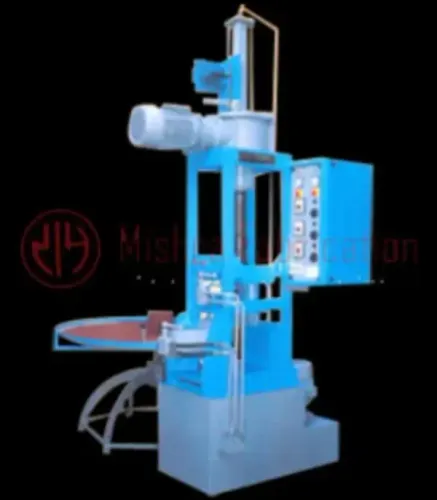
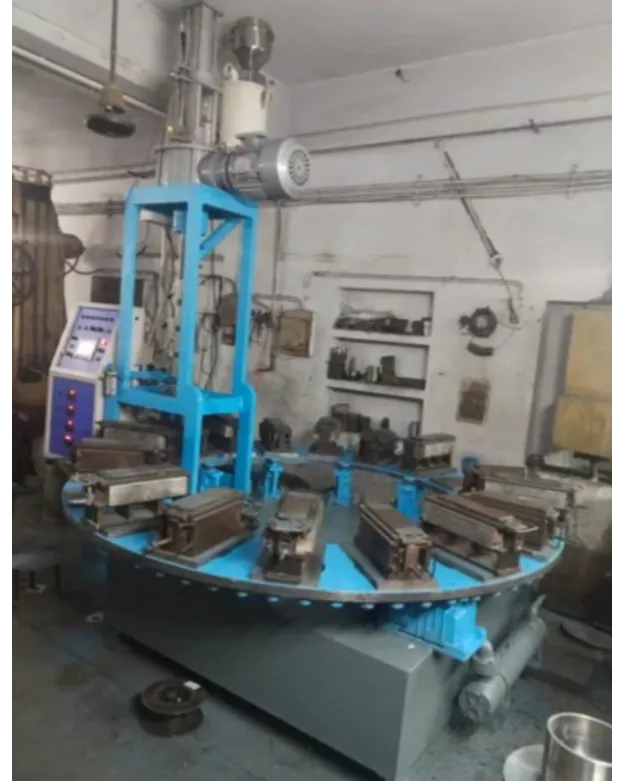
A rotary platform generally carries two or more mould positions. While injection takes place at one station, another station remains accessible for loading or unloading.
After the moulding stage is complete, the platform indexes and brings the prepared mould into the injection position. This allows productive work and handling activities to overlap.
Rotary configurations are often considered for:
- Insert-moulded components
- Footwear parts
- Multistage assemblies
- Components requiring manual loading
- Products with longer handling time
- Operations using multiple lower moulds
The platform arrangement must match the component, mould and safety requirements.
Identifying Whether Rotation Will Help
Begin by measuring the current process. Record injection time, cooling time, part-removal time, insert-loading time and delays between cycles.
Suppose injection and cooling require 35 seconds, while unloading and insert placement require 25 seconds. On a fixed table, these stages may create a total cycle of approximately 60 seconds. A rotary arrangement could allow much of the 25-second handling activity to take place during moulding.
Actual savings depend on indexing time, operator consistency and process design. The theoretical calculation should therefore be verified through a practical trial.
Benefits Beyond Faster Cycles
A rotary platform can offer several operational advantages:
- Better utilisation of the injection unit
- More organised loading and unloading
- Reduced waiting between cycles
- Easier division of operator tasks
- Potential for automation integration
- Consistent positioning of multiple moulds
However, increased output can expose bottlenecks in trimming, inspection or packing. The complete line must be reviewed before capacity is increased.
Important Technical Questions
Platform diameter and load capacity must be suitable for the moulds. Positioning accuracy is particularly important because the mould must align correctly at every cycle.
Buyers should ask about:
- Number of stations
- Maximum mould weight
- Platform indexing accuracy
- Rotation time
- Locking mechanism
- Sensor arrangement
- Maintenance access
- Emergency stopping
- Manual recovery after a fault
The manufacturer should explain how alignment is checked and maintained over time.
Operator Safety
Rotary movement creates specific hazards around the loading area. Guarding and sensing systems must prevent access to unsafe zones while still allowing efficient operation.
Safe operating procedures should cover loading positions, platform movement, mould cleaning and jam recovery. Operators should never reach across an active station or disable interlocks to gain a few seconds.
Calculating the Return on Investment
The financial case should be based on additional acceptable products per shift. Include the value of increased output, reduced machine idle time and possible labour savings.
Then account for:
- Higher machine purchase cost
- Additional mould requirements
- Maintenance of the indexing system
- Operator training
- Floor-space requirements
- Downstream capacity upgrades
If market demand does not support the extra output, a simpler fixed-table machine may be the more economical choice.
Local Application Support
Manufacturers in Delhi NCR often need machinery adapted to existing industrial units rather than entirely new production facilities. Floor layout, electrical capacity and access for installation can affect platform selection.
Mishra Fabrication can review cycle data, mould dimensions and handling steps when developing a rotary platform configuration. A layout drawing and product sample can make this evaluation more accurate.
A rotary platform is most valuable when handling time is a verified constraint and can be performed safely alongside moulding. When selected through real production data, it can improve machine utilisation and create a smoother, more predictable workflow.
Keywords