

Monsoon production covers far more than rain boots: PVC footwear, EVA soles, overshoes, waterproof handles, drain parts, buckets and protective covers each impose different material, mould and output demands. By the end, you will be able to calculate the machine size, specify the mould and environmental controls, and compare a New Delhi installation against the product you actually need to make.
Key takeaways
- Match the machine to PVC footwear, EVA soles, or the specific plastic product.
- Set drying, temperature, clamping and ventilation controls for each compound.
- Check mould drainage, cooling, air vents and demoulding before production.
- Demand a sample run, cycle data, spare-parts list and service response terms.
What monsoon plastic production requires from a machine
Choose the product before choosing the machine: PVC rain footwear and gumboots, EVA soles, overshoes, waterproof handles, drain and utility components, buckets, and covers demand different moulding setups. “Monsoon” describes the production brief, not a machine category or technical standard.
| Product group | Material focus | Selection priority |
|---|---|---|
| PVC rain footwear, gumboots and overshoes | PVC | Corrosion-resistant melt-path parts, short residence time, vented mould and controlled pressure |
| EVA soles | Compact or expanded EVA | Screw recovery, expansion allowance, cooling control and density consistency |
| Handles, buckets and covers | PP, TPR or recycled compounds | Shot size, colour change, contamination control and daily output |
| Drain and utility components | PP, PVC or recycled compounds | Cavity count, projected area, dimensional stability and wear resistance |
Build a product-to-machine fit sheet for every part. Record material type, finished-part weight, runner and sprue weight, projected area, cavity count, mould length and width, required injection pressure, target cycle time and expected daily output. Calculate the complete shot: parts plus runners, sprues and process cushion.
Then confirm that the screw recovers this shot within the planned cycle without leaving heat-sensitive PVC in the barrel too long.
Size clamping force from total projected area, including runners and sprues, multiplied by required cavity pressure; add an engineering margin confirmed by the mould builder. Do not select a vertical injection machine for plastic products from headline tonnage alone.
Insufficient force causes flash, mould opening and dimensional drift, while an oversized barrel increases PVC residence time and degradation risk. A machine suitable for PVC soles is not automatically suitable for foamed EVA.
How PVC, EVA and other compounds change the process
Set up material handling by compound, then tune the moulding cycle to its behaviour; PVC, EVA, TPR, PP and recycled resin are not interchangeable.
| Material | Processing behaviour | Monsoon control |
|---|---|---|
| PVC | Heat-sensitive; degradation creates hydrogen chloride, dark specks and burnt material | Stable zones, short residence time, effective purge and corrosion-resistant components |
| EVA | Compact or expanded; foamed grades need controlled expansion and cooling | Follow the grade’s temperature, speed, filling and drying instructions |
| TPR | Sensitive to shear, temperature and colour contamination | Control melt flow, mixing and purge between grades |
| PP | Usually free-flowing and less moisture-sensitive | Prevent condensation and tune shrinkage, cooling and mould temperature |
| Recycled compounds | Variable moisture, contamination, viscosity and colour | Segregate batches, filter when appropriate and verify weight and surface quality |
Do not raise PVC barrel temperatures because New Delhi is humid. PVC does not automatically need drying, but wet packaging, condensation, rain-exposed resin and contaminated regrind can cause bubbles, splay or unstable feeding. Follow the supplier’s drying instruction, and purge before shutdown; dead spots and overheating accelerate degradation.
Expanded EVA needs control of compound temperature, injection speed, mould filling, expansion allowance and cooling. A compact PVC setup will not automatically deliver consistent foamed-EVA density or dimensions.
Use this cycle:
- Load and align the mould; place fabric, insoles, metal or other inserts.
- Close and clamp, inject, apply holding pressure, cool, open and eject.
- Inspect fill, flash, weight, colour, surface defects, dimensions and flexibility.
Vertical layouts suit manual inserts and overmoulding, useful in several vertical injection moulding applications. Their advantage declines when high-speed automated loading and unloading determines output.
Mould design decides whether rain footwear comes out correctly
A boot mould can produce flash, burns or distorted sizes even when the injection machine is correctly sized. Design the cavity, runner, vents and cooling system around the PVC, EVA or other compound and the finished product.
1. Match cavity count and layout to projected area, platen access, manual loading space and required daily output. Specify a balanced runner and gate suited to the compound, with vents at the end of flow and at known air-trap points.
Inadequate PVC venting causes burns, trapped air and short shots; uneven cooling causes shrinkage, warpage and inconsistent boot dimensions.
2. Place cooling channels for uniform mould temperature, and use controlled ejection so soles and boots leave without distortion. Specify durable flash shut-offs that tolerate repeated clamping, then select mould steel and surface treatment for the expected wear. Ask whether the mould accepts the complete shot, including runners, sprues and process cushion.
3. For multi-colour footwear, define whether the setup needs a rotary table, shuttle table or multiple injection units. Include mould alignment, guarding, colour-change control and station synchronization in the specification. These details matter across vertical injection moulding applications, not only footwear.
Clean and dry the mould after production, store it protected from moisture and schedule rust inspections during humid weather. Validate waterproofness, slip resistance, abrasion resistance and flex durability on finished parts; a vertical injection machine for plastic products cannot prove those properties through clamping force or quoted cycle time.
Monsoon installation controls for a New Delhi factory
Keep the electrical panel away from roof leaks and splash zones, and provide floor drainage before installing a vertical injection moulding machine for monsoon in New Delhi. Raise resin and additives above floor level, store them under cover, and load the hopper through a covered arrangement.
1. Inspect the machine, mould, electrical panel and cable routes for condensation before energising. Dry wet surfaces and check for corrosion; do not switch on a damp panel.
2. Fit a suitable compressed-air dryer, then drain receivers, filters and low points. Moisture can disrupt valves, ejectors and mould surfaces.
3. Confirm the site supply: normally 415 V, three-phase, 50 Hz for Indian industrial equipment. Check motor capacity, earthing, panel compatibility, cable protection, compressed-air capacity and backup arrangements. State an IP rating only when the selected machine and panel documents it.
4. Specify fixed guards and interlocked access around the moving platen, rotary table, mould halves and ejector area. Require controls that prevent unexpected start-up. Use ISO 20430 for injection-moulding-machine safety requirements and ISO 12100 for the machinery risk assessment.
5. During commissioning of a plastic moulding machine in New Delhi, record barrel temperatures, injection pressure, holding pressure, cooling time, cycle time, part weight and defect rate under actual site conditions.
6. Put mould drying and corrosion checks on the daily monsoon checklist. Do not raise PVC barrel temperatures merely because humidity has increased; follow the compound supplier’s process window.
How to compare suppliers and validate the selected setup
Send every supplier the same product data sheet: material and grade, complete shot weight, projected area, cavity count, mould dimensions, target cycle, daily quantity, insert method and finished-part tests. This makes a plastic moulding machine in New Delhi comparable on production evidence, not catalogue tonnage.
Ask for:
- Usable shot range, screw recovery time, screw geometry and barrel-zone control method.
- PVC purge procedure, corrosion-resistant component choices and injection-pressure range.
- Clamping-force calculation and documented utilities, including 415 V three-phase, 50 Hz supply, motor capacity, earthing and compressed air.
- Local support for heaters, thermocouples, seals, hydraulic or servo components and control-panel parts.
| Supplier comparison | What to verify | Reject when |
|---|---|---|
| Machine sizing | Complete shot, usable shot and recovery time | Only nominal shot or headline tonnage is quoted |
| Mould fit | Projected area, cavity pressure, runners, sprues and engineering margin | No written clamping-force calculation |
| Service | Local parts and technician response | Every repair depends on overseas supply |
| Process fit | Material, mould, insert method and environmental controls | The quote ignores PVC residence time or EVA expansion |
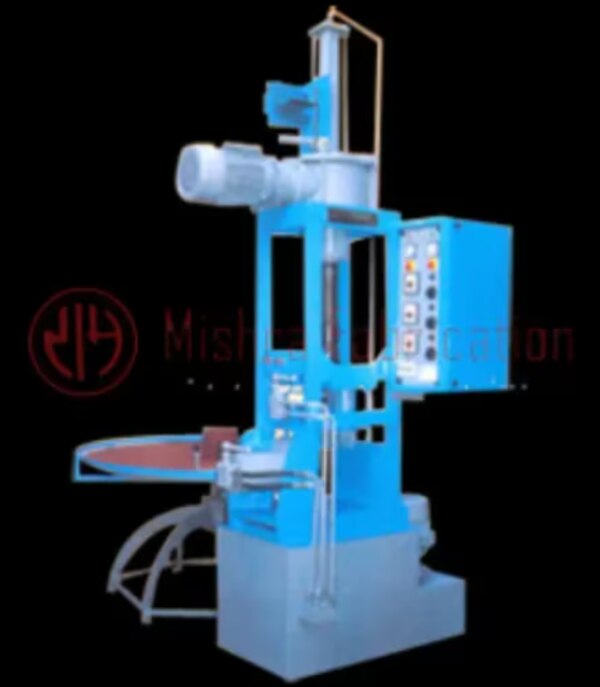
Mishra Fabrication becomes relevant when it reviews the footwear or plastic-product brief, matches the vertical layout to manual insert work, and defines mould, material and environmental requirements rather than quoting tonnage alone.
Require a sample run with the production compound and mould. Set acceptance limits for part weight, dimensions, flash, colour, surface finish, foamed-EVA density, flex performance and water resistance. Compare the validated cycle and usable shot, not a catalogue maximum.
Approve a vertical injection moulding machine for monsoon in New Delhi only after records show repeatable output across a realistic shift; apply the same standard to any vertical injection machine for plastic products.
Related products
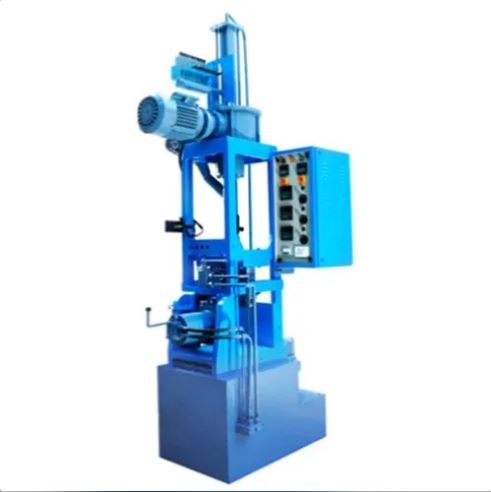 | Vertical Injection Moulding Machine Vertical Injection Moulding Machine ₹500000 Clamping Force 23m/t Material Mild Steel Max. Plasticizing Capacity 60 Kgs/hr Injection Pressure 400 Kgs/cm2 Pump Drive 120 Kgs/cm2 Heating 3.25 K.W. View product → |
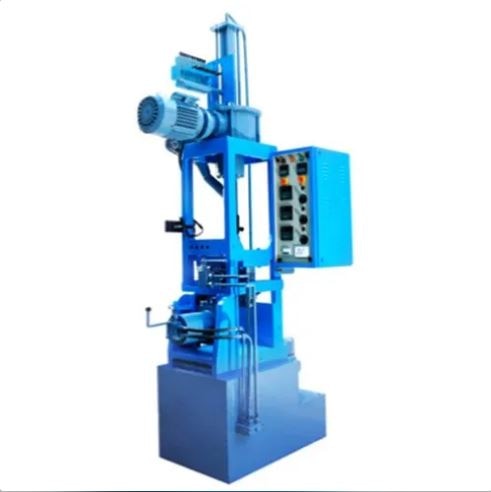 | Injection Molding Machine ₹450000 Clamping Force 100 Ton Automation Grade Semi-Automatic Machine Structure Vertical Machine Weight Monted on Machine Model Name/Number Super Delux... View product → |
Frequently asked questions
What does monsoon plastic production require from a vertical injection machine?
It requires a machine matched to the product, compound, mould size, shot weight, clamping force and expected cycle time. Rainy-season production also benefits from controlled material storage, electrical protection, ventilation and cooling-water management.
How do PVC and EVA change the injection moulding process?
PVC and EVA need different material handling, barrel temperature profiles, residence-time limits, injection speeds and cooling conditions. Use the compound supplier’s processing range, then confirm settings through a controlled sample run.
Why does mould design affect rain footwear quality?
Cavity balance, air vents, cooling channels, drainage, gate location and demoulding features affect filling, surface finish, sole bonding, dimensions and flash. Inspect these features before selecting the machine.
What should a New Delhi factory control during monsoon installation?
Protect the electrical panel and cables from moisture, provide stable earthing and voltage protection, control material humidity, prevent cooling-water contamination and keep access areas dry. Record commissioning checks before production.
How can you validate a vertical injection machine supplier?
Ask for a product-specific trial, shot-weight and cycle records, machine specifications, installation scope, warranty terms, spare-parts availability, operator training and service response commitments.
Related products
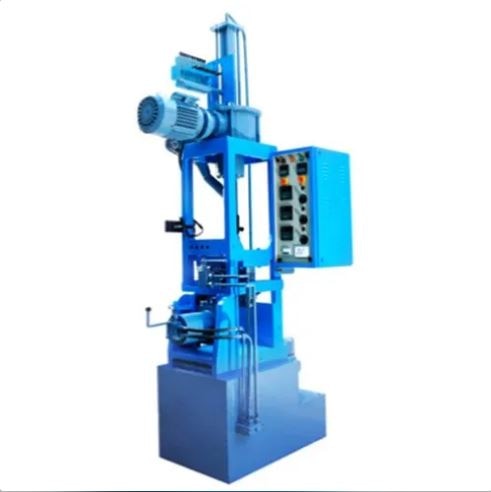 | Injection Moulding Machine VRT 1000 Super Deluxe Vertical Injection Moulding Machine ₹500000 Clamping Force 1000 Material Metal Max. Plasticizing Capacity 100 Kgs/hr Screw Diameter 63.5 mm Brand RAM Maximum Shot Capacity 1000 Grms. View product → |
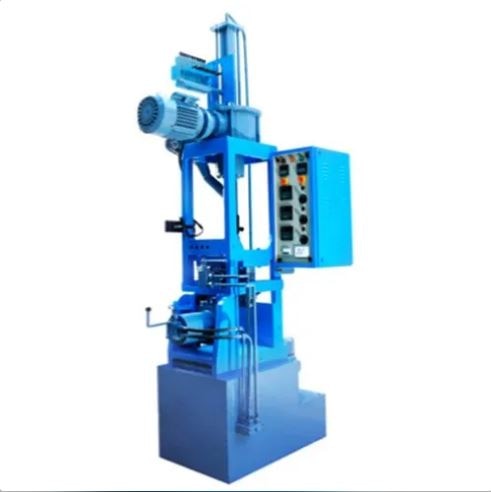 | Injection Moulding Machine VRT Gum Boot Deluxe Vertical Injection Moulding Machine ₹600000 Clamping Force 500 Ton Material Metal Max. Plasticizing Capacity 125 Kgs/hr Screw Diameter 70 mm Number Of Screws Rotations 240 r.p.m Maximum Shot... View product → |
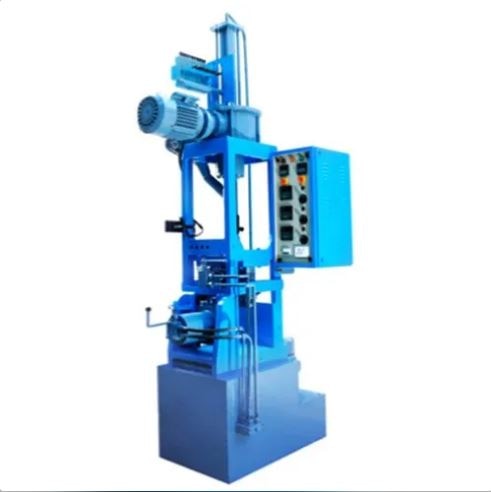 | Injection Moulding Machine VRT 600 Vertical Injection Moulding Machine ₹450000 Clamping Force 500 Ton Material Metal Max. Plasticizing Capacity 60 Kgs/hr Screw Diameter 55 mm Brand RAM Power Source Electric Maximum Shot Capacity... View product → |
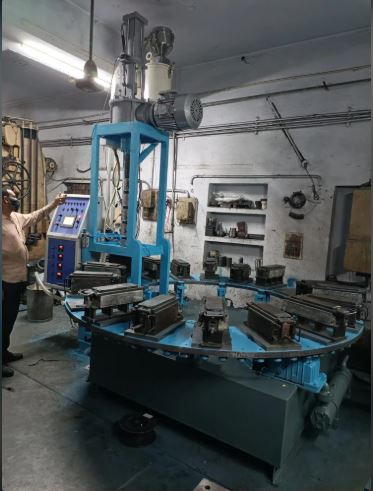 | Injection Molding Machine Automatic Rotary Vertical Injection Moulding machine for all type pvc footwear ₹1850000 Machine Type Vertical Injection Moulding Machine Material PVC Automation Grade Automatic Brand RAM Country of Origin Made in India Application For... View product → |