Winter production in Delhi is not simply a matter of buying a higher-tonnage machine: you must match seasonal demand, shot weight, clamping force, material behaviour, mould design, cooling, labour, and site infrastructure. By the end, you will have a practical method for calculating required capacity, comparing machine layouts, qualifying PVC or EVA processing, and planning a reliable pre-season installation.
Key takeaways
- Size capacity for peak-month demand, not annual average output.
- Match shot weight and clamping force to the full moulded part and runner.
- Test PVC, EVA, TPU, and TPR grades in the actual mould before launch.
- Check cold-start heating, electrical stability, ventilation, and shift-service support.
Define the Winter Product and Calculate the Capacity You Actually Need
Plan winter production around the peak month, not the annual average. Include PVC gumboots, rain boots, insulated soles, slippers, shoe components, storage bins, and other cold-season plastic goods.
- Forecast peak orders by product: pairs for footwear and pieces for components or bins.
- Convert demand into shots: multiply required pairs or pieces by cavities to find total cavity impressions, then divide by cavity count. Add runner and sprue mass to shot weight, and add allowances for rejects, warm-up, downtime, mould changes, and operator handling.
- Divide the required good output by demonstrated shots per hour, not the catalogue cycle time.
Example: 9,000 pairs per month from a two-cavity sole mould require 4,500 shots. At 120 g per cavity plus 40 g of runner and sprue, each shot uses 280 g. With 5% rejects, 10% downtime, 30 minutes warm-up, and two 20-minute mould changes, an eight-hour shift provides about 6.5 productive hours.
At a demonstrated 30-second cycle, that is 780 shots, or about 1,482 saleable pairs after rejects. Advertised plasticising capacity does not equal that output.
Finished pairs also depend on insert loading, trimming, inspection, weighing, packing, and rework. A vertical moulding machine for seasonal demand must run at a sustainable point:
| Operating point | Meaning | Planning use |
|---|---|---|
| Maximum specification | Short-duration limit | Do not schedule daily production here |
| Recommended continuous point | Stable output with thermal recovery | Use for capacity calculations |
Winter plastic production machinery should be tested with the actual mould and compound. Record cold-start warm-up, first-article rejects, converged cycle time, part weight, flash, short shots, and colour variation before committing.
Match Shot Weight, Clamping Force, Mould Design, and Machine Layout
Usable shot capacity must cover the combined weight of every cavity, runner, and sprue, with plasticising recovery completed before the next cycle. Check demonstrated output, not the barrel’s headline capacity; slow recovery lengthens the cycle and reduces saleable production.
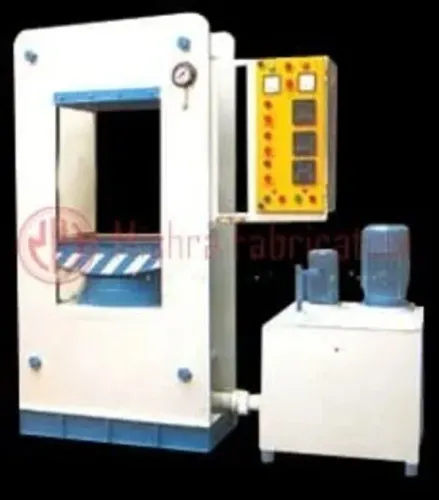
Select clamping force by multiplying projected part-and-runner area by projected cavity pressure, then adding a safety margin suited to the material and process. Do not select a vertical moulding machine for seasonal demand by part weight or headline tonnage alone: a thin, wide sole can need more force than a heavier, compact part.
Confirm the mould envelope before ordering:
- Platen dimensions, mould height, daylight, ejector stroke, nozzle reach, and mould weight
- Cooling connections, tread depth, undercuts, draft, and parting-line flash control
| Layout | Strength | Trade-off |
|---|---|---|
| Stationary vertical | Easy insert placement and compact tooling | More manual handling; limited cavity expansion |
| Horizontal | Strong automation and high-cavity production | Inserts need reliable loading and alignment |
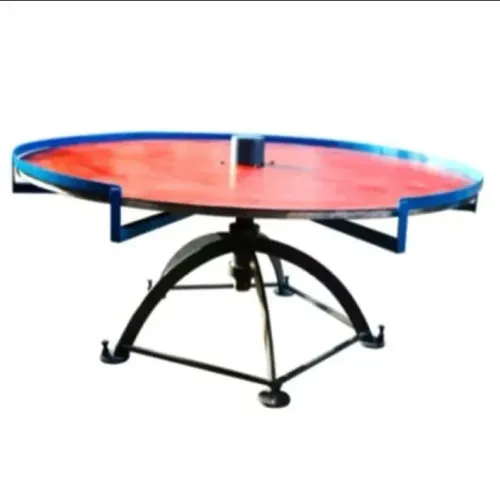
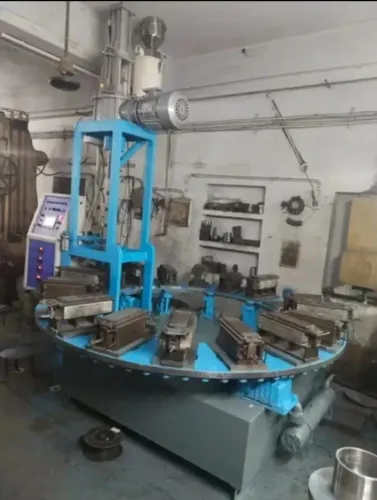
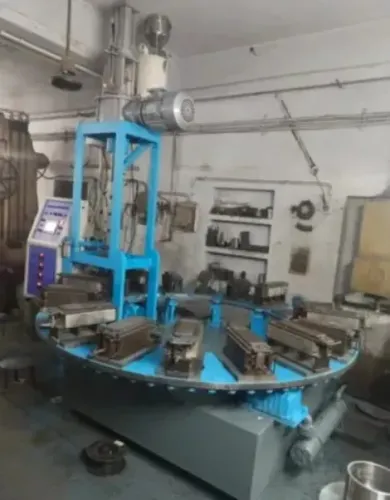
| Rotary vertical | Multiple stations reduce handling time | More floor space, labour coordination, and complex changeovers |
| Dedicated footwear line | Suits sole moulds and size changes | Higher tooling commitment and less product flexibility |
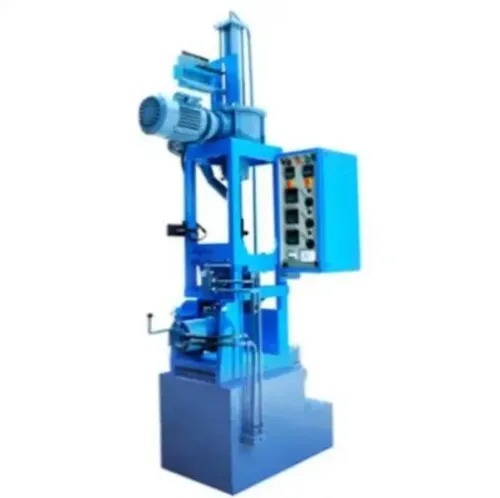
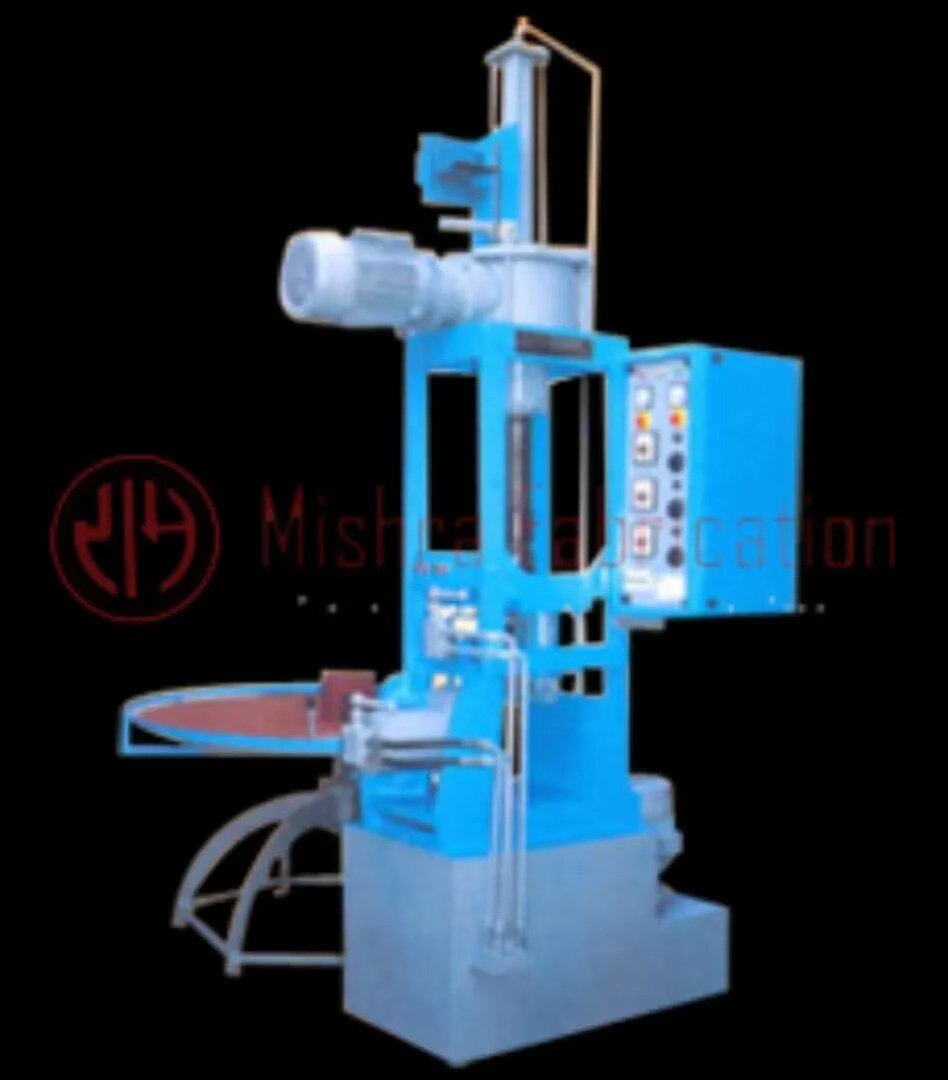
A vertical injection machine in Delhi suits manual inserts when operators can work safely and consistently at the lower platen. Choose semi-automatic operation when insert placement, size changes, low cavity count, or frequent mould swaps dominate; automatic rotary production earns its cost only when volume justifies extra stations, tooling, floor space, and setup complexity.
For a winter footwear production machine in Delhi, test the actual mould through a cold start and extended shift. Record flash, short shots, part weight, recovery time, and cavity balance before approval.
Qualify PVC, EVA, TPU, TPR, and Other Materials Before Production
A machine listed for PVC footwear is not automatically suitable for every winter compound. PVC, solid injection-grade EVA, foaming EVA, TPR, TPU, rubber-like compounds, and general plastics need separate checks for barrel-zone and nozzle temperatures, screw geometry, metering accuracy, drying or preheating, mould temperature, venting, corrosion resistance, and melt residence time.
Many footwear EVA compounds begin near a 160–200 °C melt window, but vinyl-acetate content, foaming system, fillers, colourants, and formulation change the result. Use the compound supplier’s guidance, not a universal recipe, then qualify it on your winter footwear production machine in delhi or other winter plastic production machinery.
- Set barrel zones and nozzle temperature within the supplier’s window; establish mould temperature, injection speed, holding pressure, cooling time, screw back pressure, and demoulding temperature through trials.
- Run short shots, then record part weight, shrinkage, dimensions, colour, cycle stability, and first-shot results after cold start and steady operation.
- Inspect for toe short shots, weld lines, sink, flash, bubbles, poor insert bonding, warping, colour streaks, brittle soles, and PVC degradation. PVC needs controlled residence time, purge practice, suitable screw and barrel materials, exhaust, and no stagnant melt zones.
- For insert moulding, locate the upper in fixed nests, clamp or pin it against movement, check toe and sole alignment, verify cavity clearance, then cool and remove the part with guarded tools rather than pulling against hot edges. Ensure vents release air; extra pressure can worsen flash instead of curing burns or trapped-air defects.
Make the Delhi Installation Stable Through Cold Starts and Long Shifts
1. Keep resin sealed and dry at the compound supplier’s specified temperature; bring cold bags into a conditioned area before opening. Dry hygroscopic grades to the supplier’s time and temperature, and let moulds reach room temperature above the dew point before circulating water. Condensation causes splay, rust and inconsistent bonding.
Check hydraulic-oil viscosity at the coldest start; use the specified grade, never “thin” oil with another product.
2. Install the vertical injection machine in Delhi on a level floor rated for its weight, with lifting access, clear space around the platen, safe material movement and ventilation for heat and PVC fumes. Provide a correctly sized three-phase cable, stable voltage, verified earthing and protection by a qualified electrician.
Assess guarding, interlocks, emergency stops and restart prevention against ISO 20430.
3. Use a chiller or cooling tower with filtration, flow meters or switches, temperature control and leak-proof hoses. Warm or restricted water extends cycles and changes shrinkage; unstable flow creates cavity-to-cavity variation. Insulate cold lines where condensation is possible.
- Run this checklist every start and stop:
- Inspect hopper and feed throat; purge stagnant melt.
- Start heaters, confirm every thermocouple, then complete the manufacturer’s warm-up and soak period.
- Clean the mould, check hydraulic leaks, and test guarding and emergency stops.
- After overnight shutdown, approve the first acceptable shot for weight, dimensions, flash, short shots and colour.
- Before mould changes, stop, isolate electrical, hydraulic and stored pressure, and verify zero pressure.
Maintain oil, filters, lubrication, heater bands, thermocouples, screw, barrel and cooling channels to schedule. Record batch, drying, settings, mould, cavity, cycle, weight, dimensions, defects and operator sign-off. This turns winter plastic production machinery from a cold-start gamble into repeatable production.
Compare Suppliers, Changeover Costs, and a Realistic Pre-Winter Launch
A short seasonal window rewards repeatability, not headline tonnage. Ask each supplier for a machine test report, actual shot capacity, clamping-force test, and a trial using your mould and compound.
- Confirm mould envelope: platen size, mould height, daylight, ejector stroke, nozzle reach, mould weight, cooling connections, and flash control.
- Demand a spare-parts list, warranty exclusions, installation scope, operator training, and Delhi service response times.
- Check stock or lead times for heaters, thermocouples, seals, pumps, and controls.
Compare measured energy per acceptable pair, not motor nameplate power.
| System | Advantage | Check before choosing |
|---|---|---|
| Servo-hydraulic | Lower idle energy and better partial-load control | kWh per acceptable pair during your cycle |
| Fixed-pump hydraulic | Lower complexity and possible purchase cost | kWh per acceptable pair, heat generation, and idle hours |
A changeover costs more than clamp movement: remove the mould, cool and drain circuits, disconnect electrical and hydraulic lines, centre and secure the mould, adjust ejector height, load the recipe, purge, absorb colour-change waste, run trial shots, pay operator time, obtain quality approval, and lose production hours.
Standardised mould bases and pre-set recipes often save more time.
Launch in this order: product trial; mould manufacture or modification; installation; commissioning; training; pilot production; approval; inventory build before peak demand.
For a vertical injection moulding machine for winter production in Delhi, compare Mishra Fabrication’s gumboot, PVC footwear, school-shoe, sports-shoe, general vertical, and rotary options against your shot weight, mould, compound, labour model, target output, power, water, and service needs.
A winter footwear production machine in Delhi is not automatically interchangeable with a vertical injection machine in Delhi.
Related products
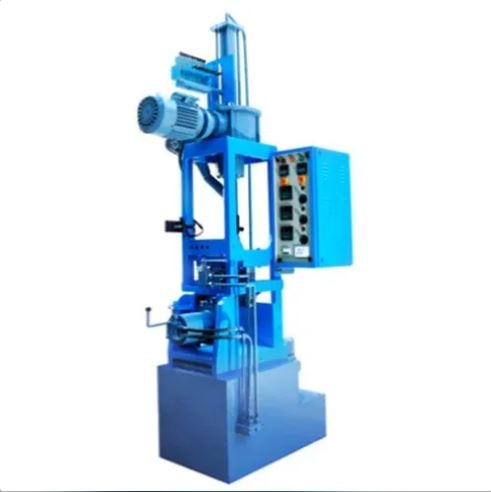 | Vertical Injection Moulding Machine Vertical Injection Moulding Machine ₹500000 Clamping Force 23m/t Material Mild Steel Max. Plasticizing Capacity 60 Kgs/hr Injection Pressure 400 Kgs/cm2 Pump Drive 120 Kgs/cm2 Heating 3.25 K.W. View product → |
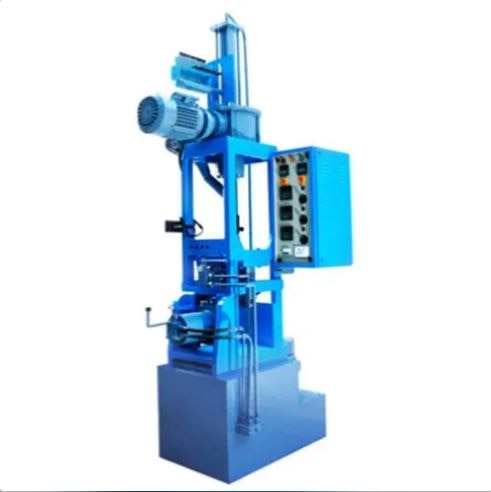 | Injection Molding Machine ₹450000 Clamping Force 100 Ton Automation Grade Semi-Automatic Machine Structure Vertical Machine Weight Monted on Machine Model Name/Number Super Delux... View product → |
Frequently asked questions
How do you calculate capacity for winter production?
Calculate required parts from peak-month demand, working days, shifts, cavity count, cycle time, scrap allowance, and planned machine utilisation. Do not size the machine from annual average demand.
How do shot weight and clamping force affect machine selection?
Choose shot weight for the complete part, runners, and process cushion. Check clamping force against projected mould area, cavity pressure, and the mould maker’s recommendation, then confirm the mould fits the machine layout.
Which materials should you qualify before producing winter footwear?
Run trials with the exact PVC, EVA, TPU, TPR, or other grade, colour, additives, and mould. Record melt temperature, injection pressure, cycle time, shrinkage, hardness, surface finish, and defects before approving production.
What installation checks matter for a Delhi winter production line?
Verify electrical voltage and phase stability, heater warm-up, hydraulic or servo performance during cold starts, ventilation, compressed-air quality, safe material storage, and service access before long shifts begin.
How should you compare suppliers for a seasonal production machine?
Compare usable output, mould compatibility, changeover time, commissioning scope, operator training, spare-part availability, warranty terms, and local service response instead of comparing machine price alone.
Related products
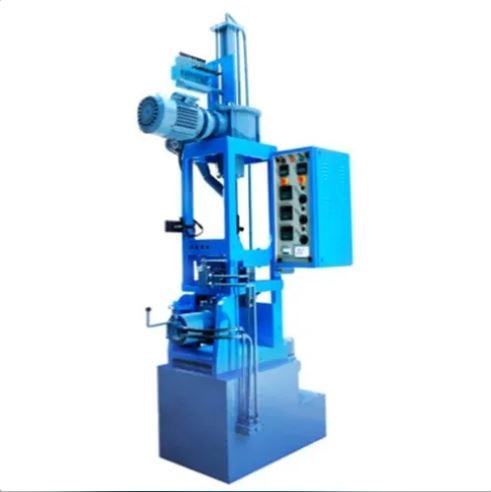 | Injection Moulding Machine VRT Gum Boot Deluxe Vertical Injection Moulding Machine ₹600000 Clamping Force 500 Ton Material Metal Max. Plasticizing Capacity 125 Kgs/hr Screw Diameter 70 mm Number Of Screws Rotations 240 r.p.m Maximum Shot... View product → |
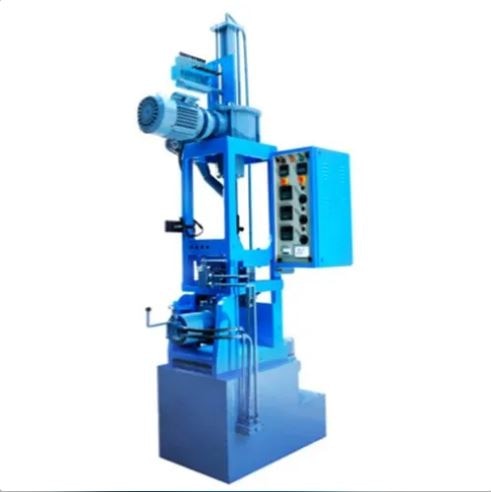 | Injection Moulding Machine VRT 1000 Super Deluxe Vertical Injection Moulding Machine ₹500000 Clamping Force 1000 Material Metal Max. Plasticizing Capacity 100 Kgs/hr Screw Diameter 63.5 mm Brand RAM Maximum Shot Capacity 1000 Grms. View product → |
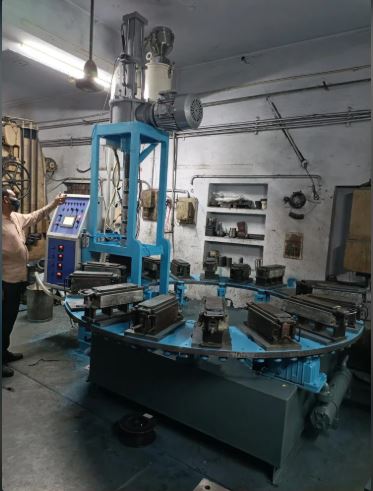 | Injection Molding Machine Automatic Rotary Vertical Injection Moulding machine for all type pvc footwear ₹1850000 Machine Type Vertical Injection Moulding Machine Material PVC Automation Grade Automatic Brand RAM Country of Origin Made in India Application For... View product → |
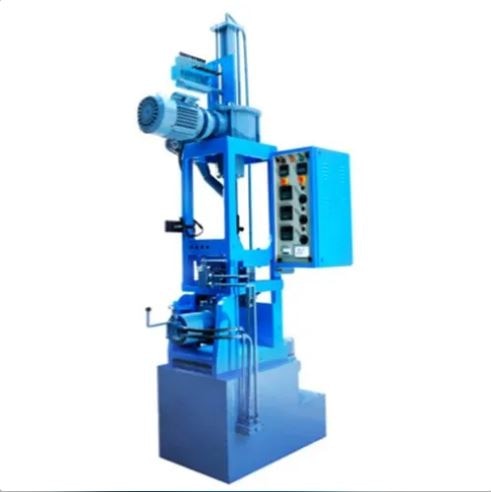 | Vertical Injection Moulding Machine ₹450000 Capacity(Shoes/Day) 600 Production Capacity 1000 pc Country of Origin Made in India Brand Ram Company Mishra Fabrication This shoemaking process... View product → |
Keywords