Rain, condensation and unstable electrical supply can turn a suitable moulding line into a source of splay, bubbles, flash, downtime and safety incidents. By the end, you will know how to prepare the workspace, condition PVC or EVA, choose the right machine format and test a complete monsoon-ready production setup.
Key takeaways
- Keep rainwater, condensation and wet floors away from controls and the rotary table.
- Dry PVC and EVA materials before production and record moisture-related defects by batch.
- Use a rainy-weather start-up, operating and shutdown checklist for every shift.
- Compare quotations using output, stations, moulds, utilities, warranty and acceptance-test results.
How to make a rotary moulding area safe before the Delhi rains
Before operating an automatic rotary injection moulding machine for monsoon production in Delhi, keep rainwater, condensation and unstable power away from the rotary table, moulds and controls. A dry, well-drained floor matters as much as machine capacity.
1. Inspect the roof, walls and windows for leaks, then repair them before production. Raise the machine or place vulnerable auxiliaries above floor level, and install a sloped floor, drain channel and drip tray beneath cooling-water connections.
2. Check every hose, coupling and drain for leaks. Route discharge water into a fixed drain, not across the walkway. Insulate chilled lines where condensation forms; water on the platen creates a slip hazard, product defects and a short-circuit risk.
3. Keep the control cabinet away from direct spray and floor splash. Seal cable entries, protect exposed cables in conduit, and fit the cabinet heater or anti-condensation heater specified for the controls. A room dehumidifier cannot replace cabinet sealing.
4. Have an electrician verify protective earthing, insulation resistance, RCCB operation, phase sequence, overcurrent protection and under-voltage or phase-failure protection after a long shutdown. Fit surge protection where the site supply suffers storm-related fluctuations, and never handle plugs or breakers with wet hands.
5. Confirm guards and interlocks cover the rotary table, mould-opening zone, injection point and loading stations. Leave a clear, marked access path and test the emergency stops before loading material, using ISO 20430 as a reference for the risk review.
Include sealed resin storage, dry compressed-air filtration, cooling-water monitoring and spare seals in the monsoon plastic production equipment package.
How humidity changes PVC, EVA and footwear moulding results
Wet pellets do not always require drying. Dry PVC only when the supplier specifies it, condensation is visible, bags were opened in damp air, or splay and bubbles appear after excluding water entry; PVC is not strongly hygroscopic.
Do not raise barrel temperature to cure these defects: excessive heat, long residence time, or stagnant material can degrade PVC, release hydrogen chloride, and create yellowing, brown streaks, or black specks.
EVA compounds need stricter control because fillers, pigments, additives, and blowing agents respond differently to moisture. Follow the compound supplier’s drying temperature, time, and maximum moisture limit rather than applying a generic EVA rule.
Store every material on pallets, away from walls and roof leaks, in sealed original bags or lidded containers. Reseal opened bags immediately, rotate stock by opening date, and move material through a covered transfer route. Keep colour masterbatch, regrind, inserts, and finished soles dry as well.
A plastic moulding machine during monsoon production exposes wet material through these clues:
| Material or symptom | Likely moisture clue | Check before changing settings |
|---|---|---|
| PVC splay, silver streaks, bubbles | Wet pellets, condensation, or water in feed throat | Drying record, hopper, conveying line |
| EVA blisters, uneven cells, variable sole weight | Damp compound or blowing-agent imbalance | Supplier limit and material moisture |
| Yellow or brown PVC streaks, sharp odour, black specks | Thermal degradation, not ordinary humidity | Actual temperatures, residence time, stagnant material |
| Surface marks or voids | Wet inserts, mould condensation, or leakage | Inserts, cooling lines, mould surface, then settings |
The rainy-weather start, running and shutdown procedure
Before a rainy-season shift, inspect the roof, walls and floor around the machine for leaks, standing water and slippery patches. Treat a rotary injection machine for rainy season in Delhi as unsafe to start until the cooling circuit, electrical cabinet and rotary table are dry.
1. Check mould cooling hoses, couplings, drain routing and drip trays. Look for condensation on moulds, platens and water lines; a drip can cause a defect, slip or short circuit. Confirm that the control cabinet is closed, cable entries are sealed, and no floor splash can reach it.
2. Verify the earth connection, guards, door and table interlocks, emergency stops, air pressure, oil leaks and safe clearance around the indexing table. Record insulation and earthing checks after a long shutdown. Do not rely on a room dehumidifier to protect a damp cabinet.
3. Start with the mould and barrel at ambient-safe conditions, then raise heater zones gradually to the material supplier’s processing range. Allow temperatures to stabilise before injection, and index the table at low speed while checking for abnormal noise, vibration or hesitation.
4. During production, watch melt temperature, cycle time, cooling-water flow, cabinet temperature, condensation and floor drainage. Stop if a hose leaks, a mould becomes wet, power flickers repeatedly or the machine gives an alarm.
5. If rainwater enters the production area, stop injection, press the emergency stop, isolate the electrical supply upstream and keep people away. Do not restart after wiping the floor; have a qualified electrician inspect drying, insulation, earthing and water-damaged components, then document the restart approval.
How to match machine format and capacity to your product
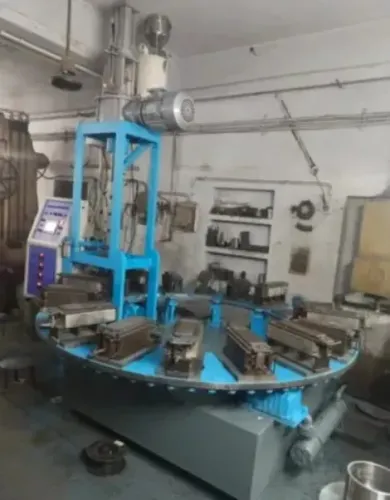
Choose an automatic rotary machine when you need repeatable, high-volume output from several moulds or stations, with less operator loading between cycles. A fixed vertical machine suits lower volumes, large inserts, or frequent mould changes; a semi-automatic machine costs less to automate but depends more on operator timing and handling.
1. Count cavities before comparing machines. Output per hour equals cavities × parts per cycle × 3,600 ÷ cycle time in seconds. Four cavities at a 30-second cycle produce 480 parts per hour before downtime; confirm whether every station runs simultaneously.
2. Check shot weight against the complete shot, not one part. Add the weight of all cavities, runners and sprue, then keep machine capacity above that total. An undersized shot causes short fills; an oversized barrel can increase residence time and degrade PVC or EVA.
3. Match clamping force to projected mould area and injection pressure. A rough check is projected area multiplied by cavity pressure, plus a safety margin specified by the machine supplier. Insufficient force creates flash around soles and mould joints.
4. Calculate capacity only after checking cycle time, cooling time and electrical load. A faster rotary table is useless if the chiller, dryer, heaters and connected load cannot support it during Delhi’s unstable monsoon supply.
For an automatic rotary injection moulding machine for monsoon production in Delhi, specify stations, injection units, shot weight, mould dimensions, locking method, installed load and cooling demand together. A plastic moulding machine during monsoon also needs sealed controls, drainage and reliable restart behaviour; those features affect usable capacity, not just safety.
What a like-for-like Delhi quotation and acceptance trial must include
A low automatic rotary moulding machine price in delhi is not comparable with a package that includes moulds, chiller, dryer, compressor, installation and commissioning. Request one quotation with these lines stated separately:
- Rotary stations; injection-unit number and size; maximum shot weight; screw diameter; clamping force or mould-locking method; mould dimensions and footwear-mould inclusion.
- Installed electrical load, cooling-water flow and temperature requirement, compressed-air consumption, automation scope, guarding, sensors and restart behaviour.
- Resin storage, covered material transfer, dryer, chiller, water filtration, leak monitoring, air-moisture separator, drainage, cabinet enclosure, anti-condensation heater, earthing checks and spare seals or thermocouples.
| Quote line | Machine-only offer | Complete monsoon package |
|---|---|---|
| Stations and moulding | Press, units and mould limits | Same, plus production moulds |
| Utilities | Electrical load only | Chiller, dryer, compressor and water filtration |
| Rain protection | Not stated | Drainage, sealed cable entries and cabinet protection |
| Commissioning | Delivery | Installation, settings and operator training |
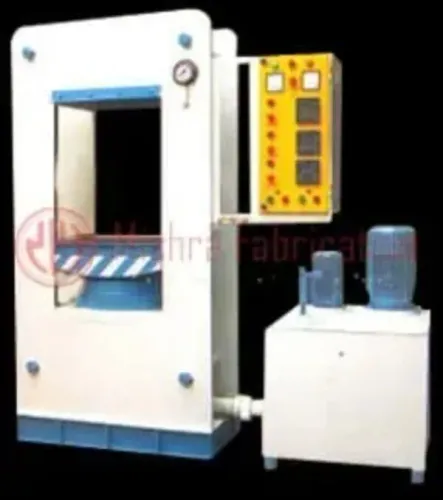
Mishra Fabrication can be asked to place every included and excluded item beside the machine specification, preventing a low headline price from hiding missing auxiliaries.
Accept the line only after a trial with your actual PVC or EVA compound and production moulds, once the press, chiller, dryer and cabinet reach operating conditions. Record cycle time, part weight, flash, splay, bubbles, cell consistency, demoulding force, cooling-water temperature, alarms and recovery after a controlled power interruption.
Repeat checks after humid exposure; a dry factory demonstration does not prove consistent monsoon plastic production equipment performance.
Related products
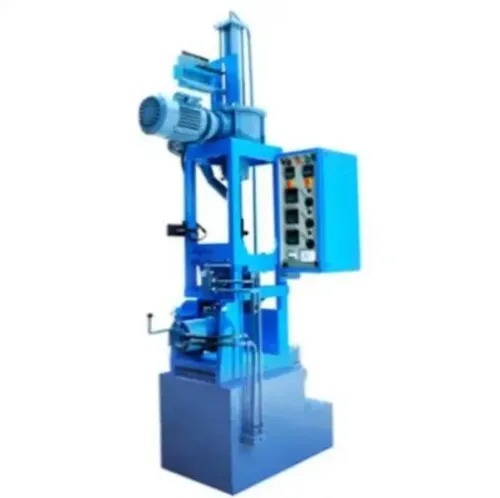
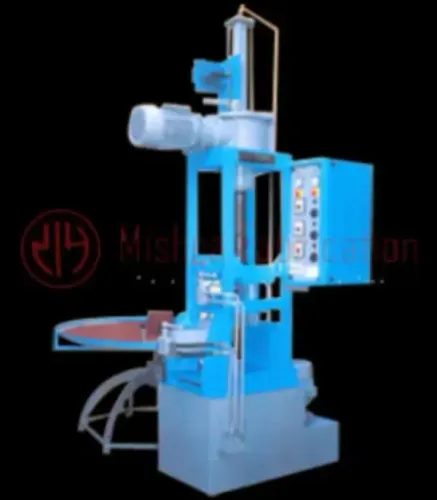
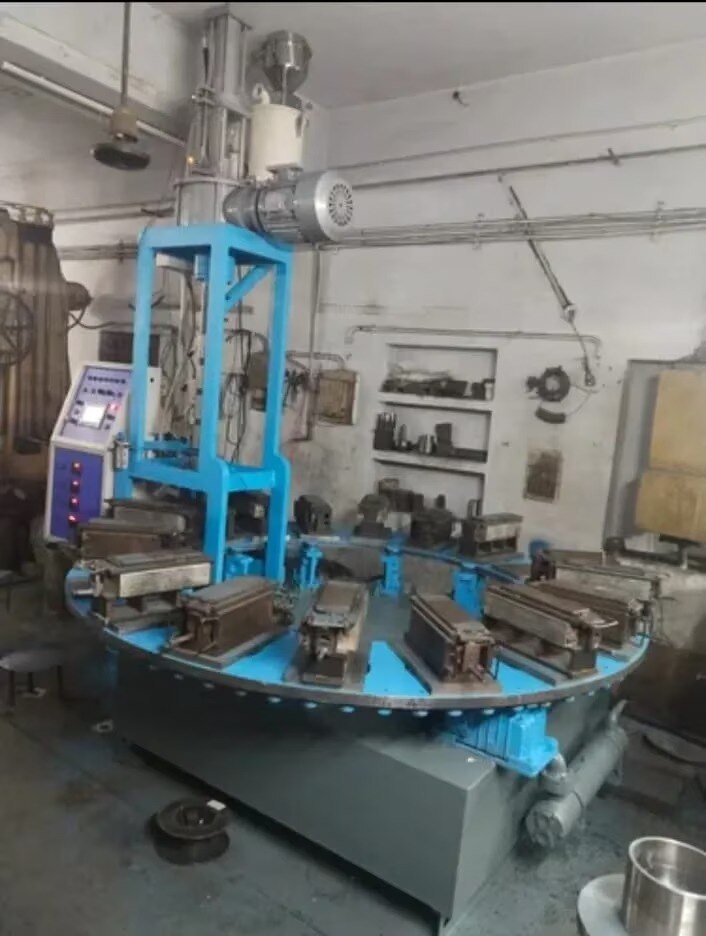
 | Automatic Roatary Injection Moulding Machin Automatic Roatary Injection Moulding Machin Automatic Rotary Injection Moulding Machine Automatic Rotary Injection Moulding Machine is designed for high-speed and efficient production of... View product → |
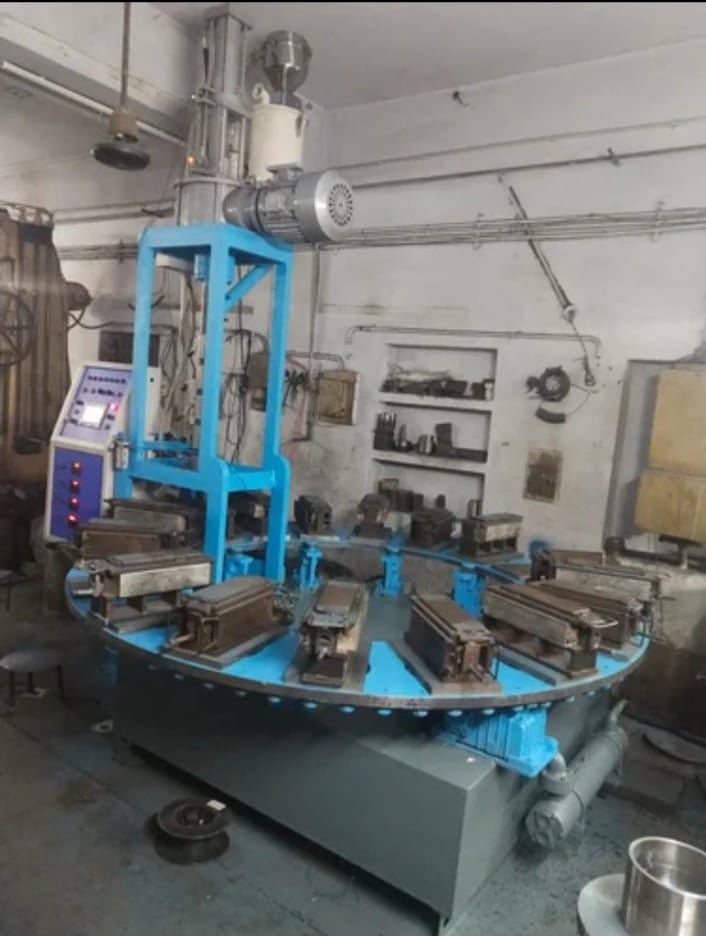
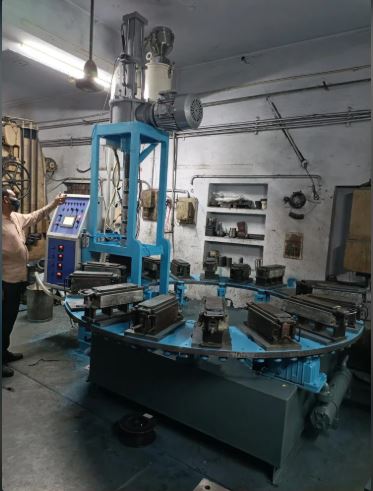 | Injection Molding Machine Automatic Rotary Vertical Injection Moulding machine for all type pvc footwear ₹1850000 Machine Type Vertical Injection Moulding Machine Material PVC Automation Grade Automatic Brand RAM Country of Origin Made in India Application For... View product → |
Frequently asked questions
How do you make a rotary moulding area safe before Delhi rains?
Keep the machine under a leak-free roof, slope the floor to drains, prevent standing water, protect electrical controls from splashes and inspect cables, earthing and emergency stops before operation.
How does humidity affect PVC, EVA and footwear moulding?
Moisture can cause bubbles, surface marks, inconsistent filling and unstable weight. Store materials sealed, dry them using the supplier’s specified conditions and track defects against material batches.
What should a rainy-weather machine procedure include?
Inspect for leaks and condensation at start-up, warm the machine gradually, monitor temperature, pressure and cycle time during production, then clean, dry and isolate utilities at shutdown.
What should a like-for-like Delhi quotation and acceptance trial include?
Specify product, material, mould count, station layout, injection volume, output target, electrical load, cooling requirements, automation, installation, warranty, spares and measured trial results.
Keywords