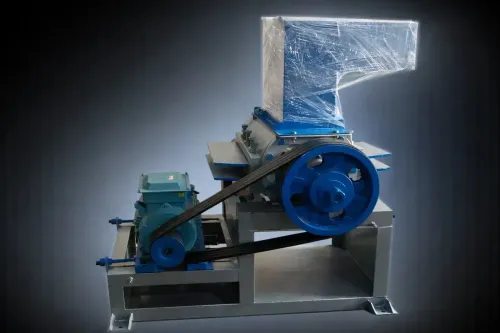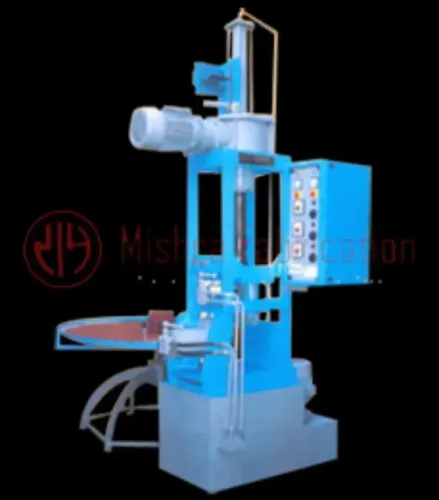
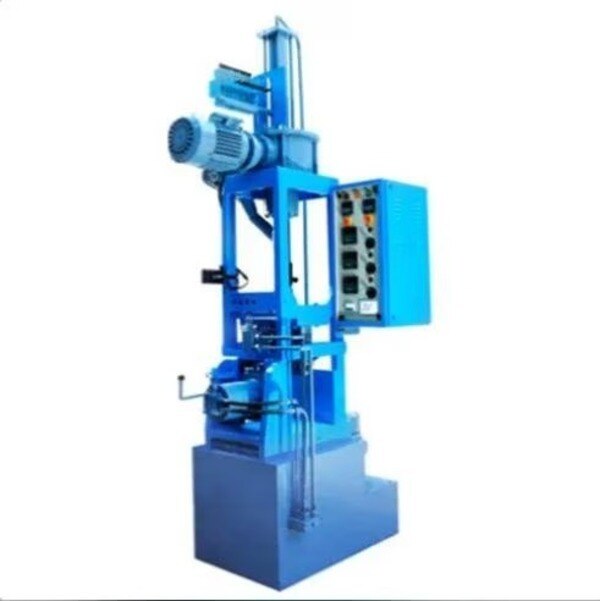
A machine that has stood idle is not ready because its display lights up. You need to control stored energy, find deterioration caused by moisture and residue, verify every safety and process function, and approve trial footwear before returning to production.
Key takeaways
- Lock the three-phase isolator before opening, moving or inspecting the machine.
- Release hydraulic and pneumatic pressure, accumulator energy and gravity-held mould hazards.
- Replace degraded fluids and remove old PVC or EVA before heating.
- Use a controlled first start, then approve sample footwear before production.
Make the machine safe before opening or moving anything
The correct first step is a documented lockout/tagout procedure, not a direct power-up. Before you inspect, open, or move the machine, isolate the three-phase electrical supply and lock the isolator. Treat hydraulic pressure, pneumatic pressure, accumulator energy, gravity-held mould parts, and hot heaters as separate hazards.
- Stop the machine and identify every energy source, including the main disconnect, hydraulic pump, compressed-air inlet, accumulator, heaters, and stored mechanical movement.
- Apply personal locks and warning tags to the electrical isolator and close the hydraulic and pneumatic isolation valves.
- Release residual hydraulic and air pressure through the designated bleed points. Restrain or block the mould, rotary platform, and other parts that could descend or rotate under gravity.
- Allow heaters, barrels, nozzles, and mould surfaces to cool, or mark them as hot and prevent contact.
- Verify isolation: test for absence of voltage with a suitable meter, check pressure gauges read zero, and attempt a start from the controls. The machine must not move, heat, or energise.
- Check guards, guard switches, emergency stops, two-hand controls, and light curtains before entering the mould-closing area. Do not bypass a failed interlock.
Use a restart safety shoe machine checklist to record the isolation, zero-energy verification, damaged cables, leaks, corrosion, rodent damage, and unsafe guards. If you cannot prove isolation, stop and call a qualified technician.
Inspect every system affected by storage
A long stop can turn a sound-looking machine into a hazard. Keep three-phase power, hydraulic and pneumatic supplies isolated; release accumulator pressure, restrain gravity-held mould parts, and inspect only after zero energy is verified.
| System | Inspect before energising | Failure to find |
|---|---|---|
| Mechanical | Remove rust and hardened PVC or EVA from the injection unit, nozzle, mould clamps, rotary platform, guides and vents. Check seized bearings, cracked guards, loose fasteners and lubrication points. | A seized bearing or blocked nozzle can overload the drive or eject material unexpectedly. |
| Hydraulic | Check oil level and condition, filters, pump, motor coupling, hoses, cylinders, fittings and seals. Look beneath the machine for leaks and inspect rods for rust or pitting. | Degraded seals cause pressure loss; a split hose can release high-pressure oil. |
| Pneumatic | Drain the receiver, inspect the regulator, filter, lubricator, hoses, valves and cylinder rods, then confirm clean, dry compressed air. | Water or blocked filters makes clamps and ejectors move slowly or fail. |
| Electrical | With power isolated, inspect cable insulation, terminal boxes, connectors, heaters, thermocouples, cabinet filters and cooling fans for corrosion, moisture, loose terminals, rodent damage and burnt wiring. Test earth continuity, insulation resistance, incoming phase voltage and phase balance before connection. | A phase imbalance, poor earth or damp enclosure can destroy a motor or expose operators to shock. |
| Control and safety | Check the control-panel supply, PLC and drive backups, limit switches, guard switches, emergency stops, light curtains and two-hand controls. Prove each safety circuit opens the intended motion. | A failed interlock permits motion while the mould area is open. |
Record every finding on the restart safety shoe machine checklist. For safety shoe production after downtime, do not energise until the motor, pump, heaters and safety circuits pass inspection.
Recover fluids, heaters, moulds and old PVC or EVA
Clean only what inspection proves recoverable; replace anything contaminated, degraded or outside specification. Take a sample of hydraulic oil before circulation: milky colour indicates water, dark sludge indicates oxidation, and metallic particles indicate wear. Replace the oil and filters, flush affected lines, and investigate the source instead of restarting on contaminated fluid.
Classify each stored item using this checklist:
- Hydraulic oil or mould-cooling fluid: recommission only if it is clear, uncontaminated and within the supplier’s specification; replace it after water, sludge or particles appear.
- Heaters and thermocouples: test resistance, insulation to earth and temperature response; replace an open heater, unstable thermocouple or element with damaged insulation.
- Moulds: clean hardened PVC or EVA from cavities, vents, parting lines and sprue paths; remove rust without changing sealing faces, and repair damaged vents or cooling channels.
- PVC or EVA in the barrel: remove it and purge with a compatible compound if it has hardened, blackened, produced gas or blocked the nozzle. Dry moisture-sensitive EVA only within the compound supplier’s stated temperature and time limits.
- Grease and exposed bearings: clean away hardened grease, lubricate with the specified grade, and replace bearings that remain seized or noisy during hand rotation.
For safety shoe machine troubleshooting in Delhi, record every replacement, fluid lot and purge result. Run heaters and cooling separately before injection, then inspect the first purge for black specks, gas, unstable flow or colour change. A clean-looking mould does not prove that its vents, dimensions or cooling circuit are sound.
Use a controlled first start instead of a production cycle
Bring the machine back under power in stages, beginning with a documented lockout/tagout release and a confirmed zero-energy check. Restore utilities only after guards are fitted, emergency stops are reset, and no one remains inside the mould or platform area.
Before running material, measure incoming phase voltage, phase balance, earthing continuity, and control voltage. Inspect the cabinet for moisture, rodent damage, loose terminals, and overheated components. Do not replace a PLC, drive, or heater controller until the supply and connections are proven stable.
Use this restart sequence:
- Energise the main isolator without enabling motion. Check alarms, displays, fans, cabinet cooling, and the saved recipe or software backup.
- Test each emergency stop, guard switch, limit switch, pump, heater zone, and temperature sensor from the control panel.
- Jog the injection unit, mould clamps, rotary platform, screw, and ejectors at minimum speed. Stop immediately for binding, abnormal noise, leakage, or position error.
- Run one dry cycle with no compound, then operate hydraulic and pneumatic functions at reduced pressure.
- Purge with approved material and make short shots at low pressure and low speed. Raise temperature, pressure, speed, and cycle rate only after filling, cooling, and ejection remain stable.
Segregate every trial piece and record its material lot, mould, recipe, temperature, pressure, and cycle time. During safety shoe production after downtime, retain first articles for checks on weight, dimensions, flash, short shots, voids, hardness or density, bonding, and required safety features. A completed cycle is not approval.
Approve the process before returning to saleable footwear
Release the first production lot only when documented tests, retained trial pieces, and approved settings show repeatable output—not merely one successful cycle. To restore safety shoe machine for after downtime in delhi, keep a signed restart record tied to the machine serial number, mould number, material lot, and operator.
1. Confirm incoming phase voltage, phase balance, earthing, control voltage, hydraulic and pneumatic pressures, heater readings, thermocouple response, cooling flow, lubrication, and safety-interlock operation.
2. Run manual movements, a dry cycle, and controlled low-speed shots before returning to normal settings. Record injection pressure, temperature, screw recovery, fill time, cycle time, ejection, and any alarms.
3. Retain and identify the first articles. Check weight, dimensions, flash, short shots, voids, weld lines, hardness or density where relevant, bonding, and safety-shoe construction features. Segregate these pieces from saleable stock.
4. Approve the final recipe only after repeated pieces remain within your documented limits. Record the approved settings, inspection results, rejected quantity, corrective actions, and the person authorising production.
Call a specialist for safety shoe machine recovery in delhi when a guard or interlock fails, phase balance is abnormal, a hydraulic leak persists, a PLC or drive loses its program, pressure or temperature remains unstable, or defects continue after basic adjustments.
Call one before restarting if software backups, material identity, mould condition, or safety-test records are missing. Mishra Fabrication can help interpret machine-specific settings when the original documentation or process history is incomplete.
Related product
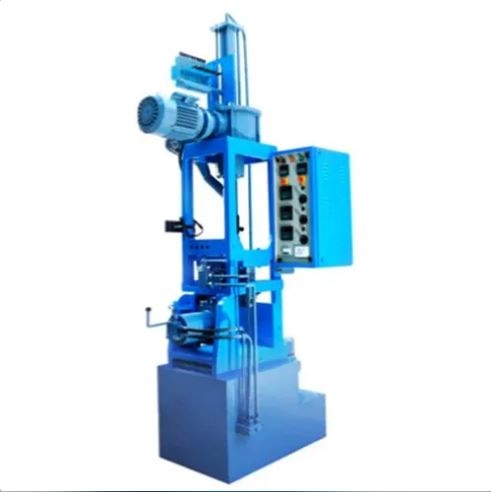 | Sole Making Machine ₹499999 Capacity(Shoes/Day) 800 Country of Origin Made in India Established in the year 1970, at Delhi, India, we, “Mishra Fabrication” are one of the... View product → |
Frequently asked questions
What is the first step when restoring a safety shoe machine after downtime?
Document a lockout/tagout procedure, isolate the three-phase electrical supply, and lock the isolator before opening or moving anything.
Which stored-energy hazards must you check before restarting the machine?
Treat hydraulic pressure, pneumatic pressure, accumulator energy, gravity-held mould parts and hot heaters as separate hazards.
What should you inspect after a safety shoe machine has been stored?
Inspect electrical components, hydraulic and pneumatic systems, heaters, moulds, hoses, seals and stored PVC or EVA for deterioration.
How should you perform the first start after extended downtime?
Use a controlled first start rather than a production cycle, monitor each system and correct faults before loading a production run.
When can you resume saleable safety shoe production?
Approve the process only after the machine runs consistently and trial footwear meets the required dimensions, bonding, appearance and safety specifications.
Keywords