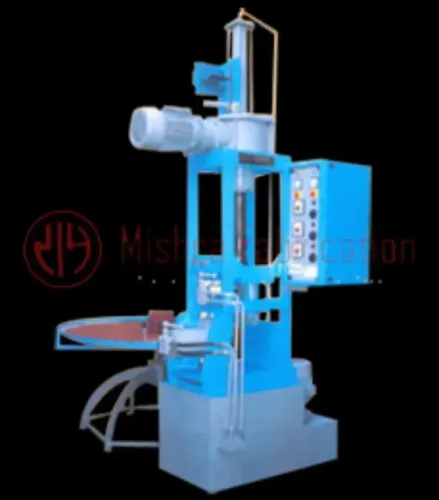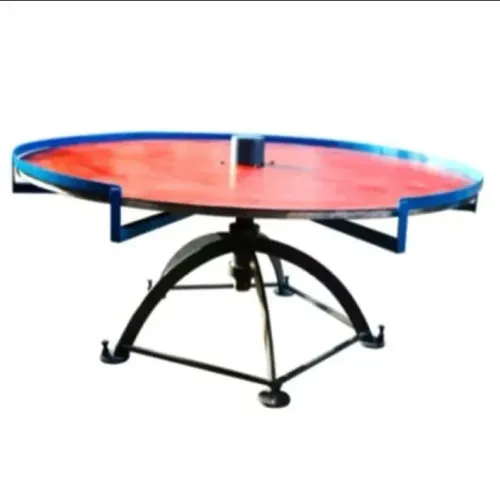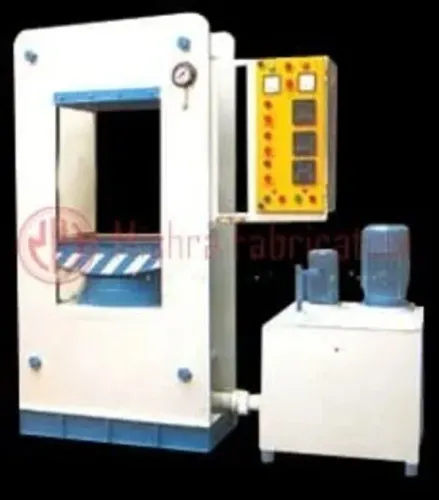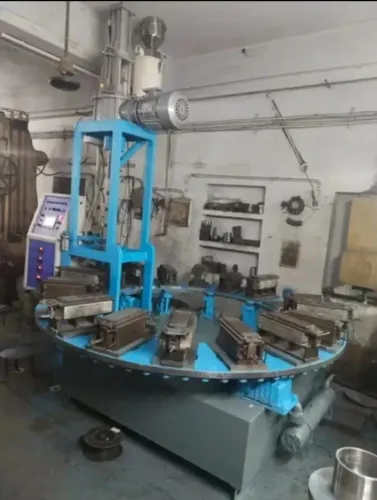
A footwear factory can use an industrial grinder when the machine, feed preparation and regrind target match its PVC, EVA, rubber or foam scrap. You will be able to identify the right grinder type, separate unsuitable materials, compare capacity honestly and specify the safety, compliance and acceptance checks needed before installation.
Key takeaways
- Grind clean PVC, EVA, rubber, foam, sprues, runners, flash and rejected soles.
- Match rotor knives, screen openings and motor power to your target particle size.
- Return regrind only when it is clean, compatible and passes production trials.
- Require guarding, emergency stops, dust control, electrical protection and installation records.
What footwear scrap can an industrial grinder process?
A footwear factory can grind clean PVC sprues, runners, flash, rejected soles, EVA scrap, rubber, foam and thermoplastic offcuts, but the machine must match the required output.
| Machine | Best use | Main limitation |
|---|---|---|
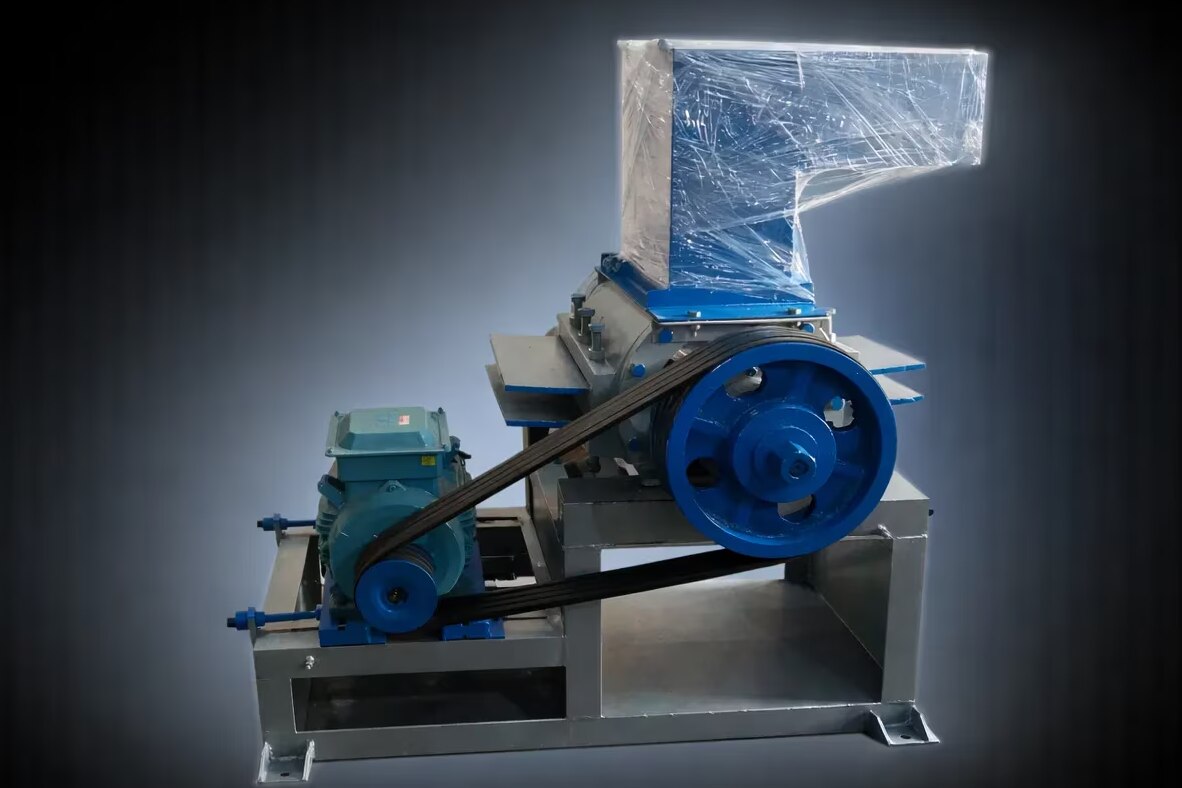
| Knife granulator | Flakes or screen-sized regrind from soles, runners and trim | Warm EVA can wrap, smear and blind the screen |
| High-speed pulverizer | Fine powder for a specific downstream process | Creates more heat and dust; unsuitable for routine flake production |
A knife granulator is the practical choice for most footwear scrap. A high-speed pulverizer makes sense only when the process requires powder, not reusable flakes.
PVC and EVA cannot be judged by the same test. Elastic EVA can bounce in the chamber, wrap around the rotor, smear across knives and block the screen when warm. Plasticised PVC, rigid PVC and filled compounds cut differently, while adhesive, textile and metal contamination change the cutting load. Metal can damage knives and screens.
Before using an industrial material grinder in Delhi, separate the feed into these streams:
- PVC, EVA, rubber and foam.
- Different colour groups.
- Clean production trim and rejected parts.
- Material containing adhesive, textile, eyelets or other contamination.
Mixed feed produces inconsistent particle size, colour, hardness and processing behaviour. Test the actual scrap, including warm or contaminated pieces, rather than relying on a catalogue capacity for an industrial grinder for footwear factories in Delhi.
How should you compare a grinder’s cutting system and screen?
Usable regrind depends on the cutting geometry and screen, not the grinder’s label or motor size. Compare these features on the same feed material:
| Feature | What to compare | Why it matters |
|---|---|---|
| Rotor knives | Knife construction, blade count, mounting and replaceability | Dull or poorly supported knives create heat, fines and uneven flakes |
| Fixed-knife clearance | Measured gap and adjustment method | Excessive clearance lets soft EVA deform instead of cutting |
| Rotor speed | Operating speed under load, not only no-load speed | Higher speed can increase heat, wrapping and screen blinding |
| Cutting chamber | Length, width and usable volume | A small chamber can bridge bulky soles before cutting them |
| Feed throat | Opening dimensions and anti-bridging design | Narrow throats reject large soles; wide throats need stronger guarding |
| Screen | Area, aperture options and support | More open area improves flow; the aperture sets particle size |
| Discharge | Enclosed outlet, conveyor, blower or cyclone connection | A sealed path limits dust and prevents bags from blocking the outlet |
Choose a fine aperture for more uniform regrind in moulding trials, but expect lower throughput and higher heat. Choose a larger aperture for waste-volume reduction or lower-grade recycling; it leaves larger particles and more oversize.
Controlled feeding, a conveyor and enclosed discharge matter in an industrial material grinder in Delhi, especially where dust requires a correctly selected filter or cyclone.
Bulky soles, foam, wet scrap, laminated uppers and contaminated pieces bridge differently from clean sprues. Require a throughput test for a footwear material processing grinder in Delhi that names material, feed size, screen aperture, knife condition, moisture and target particle distribution. A footwear-piece production rate proves nothing about grinder capacity.
When can PVC or EVA regrind return to footwear production?
Grinding does not automatically make PVC or EVA scrap reusable in footwear production. Closed-loop regrind from clean runners, sprues, flash and trim is easier to qualify than lower-grade recycling from rejected soles containing adhesive, fabric, metal eyelets or mixed compounds.
Keep PVC and EVA in separate streams, and record colour, hardness, density, formulation, contamination and batch number. Repeated heating and shear can alter melt flow and processing behaviour; mixed colours can spoil appearance, while contamination causes visible defects, unstable dimensions and damaged knives or screens.
1. Define the intended use. Regrind for a sole or internal component may tolerate more variation than material for a visible, tightly dimensioned part. Do not assume a lower-grade recycling stream belongs in premium footwear.
2. Establish the maximum regrind percentage through moulding trials. At each trial, check melt flow, density, hardness, surface finish, visible defects and dimensional consistency. Increase the percentage only when the moulded part remains within your specification.
3. Match the grinder to the compound. A grinder for pvc footwear factory in delhi must be specified around the actual plasticised, rigid or filled PVC formulation, not merely the word PVC.
A grinder for eva manufacturers in delhi needs a demonstration using the actual EVA grade, hardness, colour and scrap geometry; warm, soft EVA can smear on knives, wrap around the rotor or blind the screen.
4. Keep batch records for every grinding run, including source, contamination checks, screen size and regrind percentage. Segregation and traceability are production controls, not optional housekeeping.
What should a Delhi factory require for safe, compliant installation?
A safe installation is possible only when the grinder is treated as a guarded, dust-producing process—not a plug-in appliance. An industrial grinder for footwear factories in Delhi needs protection at the feed throat, rotor and discharge, with interlocked covers, accessible emergency stops and isolation before service.
- Specify lockout for knife changes, screen changes and maintenance. Write a jam-clearing procedure that stops power, isolates stored energy and prohibits reaching into the rotor.
- Provide accessible cleaning points for ducts, filters, electrical enclosures and ledges. Fine polymer dust can ignite when a hot bearing, friction, foreign metal or overloaded material supplies the ignition source.
- Require overload and temperature protection, controlled feeding, enclosed discharge and dust collection. Select a cyclone or filter collector for the actual dust hazard; do not accept a generic accessory.
- Put the industrial material grinder in Delhi through the site’s electrical, noise, particulate-emission, waste-handling and fire-safety review. Include it in Delhi Pollution Control Committee consent and layout discussions.
Receiving discarded plastic scrap from outside differs from reusing your own clean trim. The Plastic Waste Management Rules can create documentation, registration or reporting duties for outside waste, so confirm the factory’s role before commissioning.
The installation specification must also state Delhi summer heat limits, ventilation, available floor area, floor loading, access for knife removal and protection against voltage fluctuation. A cramped layout or unstable supply can turn a guarded machine into an unreliable one.
How should you test and buy a footwear grinder in Delhi?
Prove the machine on your waste, not on clean sprues supplied for a sales demonstration. For an industrial grinder for footwear factories in delhi, request a written quotation that names each feed condition and gives capacity in kilograms per hour for that condition, rather than one universal figure.
1. Require the quotation to state motor rating and duty, starting current, overload protection, ventilation requirements, allowable operating temperature, noise level, floor loading, knife-removal access, upstream electrical protection, available screen apertures and discharge-conveyor details. Ask for guarding, installation space and electrical connection requirements as well.
2. Run an acceptance trial using your own PVC or EVA scrap. Record feed size, screen aperture, throughput in kilograms per hour, power draw, product temperature, oversize percentage, fines, contamination carryover and every unplanned stoppage. Include bulky soles, warm elastic scrap, adhesive or textile contamination when those materials occur in production.
3. Reject a capacity claim that lacks its test conditions. Feed form, bulk density, knife condition, moisture, contamination and particle-size target all change usable output.
A grinder for pvc footwear factory in delhi, a grinder for eva manufacturers in delhi and a footwear material processing grinder in delhi need separate figures for their actual grades and scrap geometry.
Mishra Fabrication can quote a machine, but ask for the test-feed specification, sample trial, guarding details and installation requirements before comparing the offer. Catalogue capacity alone cannot prove production uptime.
Related product
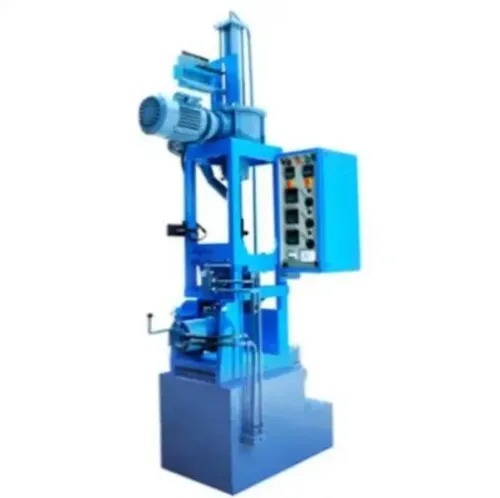
 | Grinder Grinder Mishra Fabrication is a leading manufacturer of high-performance Grinder Machines, designed for precision grinding and efficient material processing. |
Frequently asked questions
What footwear scrap can an industrial grinder process?
A suitable grinder can process clean PVC sprues, runners, flash, rejected soles, EVA scrap, rubber, foam and thermoplastic offcuts. Separate incompatible materials and remove metal, dirt and wet waste before grinding.
How should you compare a grinder’s cutting system and screen?
Compare rotor and fixed-knife design, knife material, cutting-chamber size, motor power, screen opening and screen-change access. Select the screen opening from the particle size your next process requires, not from the machine name alone.
When can PVC or EVA regrind return to footwear production?
Return regrind when it comes from one compatible material and colour stream, contains no contamination, and passes a trial for flow, density, colour and finished-part quality. Do not mix PVC with EVA or unknown polymers.
What should a Delhi factory require for safe, compliant installation?
Require fixed guarding, an interlocked access door, an emergency stop, overload protection, earthing, suitable electrical isolation, dust control and a documented installation check. Confirm the layout leaves safe access for cleaning and screen changes.
How should you test and buy a footwear grinder in Delhi?
Take representative PVC or EVA scrap to a supplier trial and record throughput, particle size, heat buildup, noise, power use and contamination. Ask for a written specification, spare-knife and screen availability, warranty terms, service response and installation scope.
Keywords