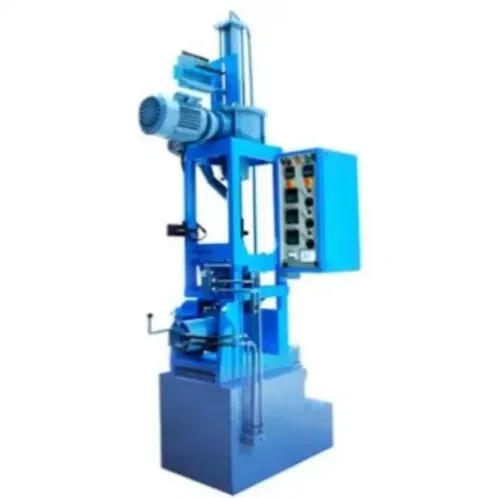
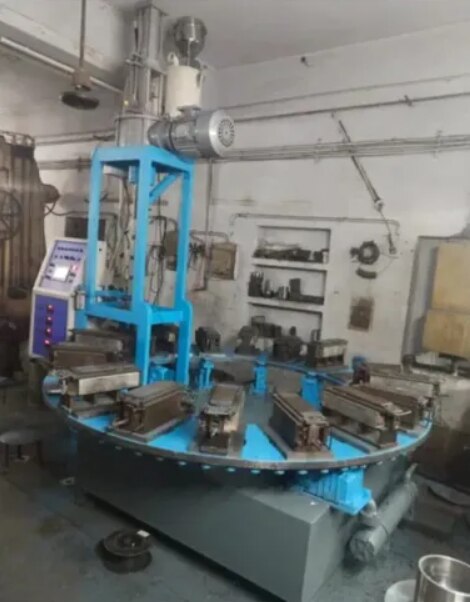
The right choice depends on whether your production needs overlapping operations across several mould stations or the flexibility of one conventional moulding position. By comparing usable output, tooling, utilities, changeover time and maintenance, you can decide which machine fits your products, floor space and production plan in Delhi.
Key takeaways
- Compare accepted output, not only the machine’s quoted cycle time.
- Choose rotary equipment when parallel station work justifies added complexity.
- Include moulds, utilities, spares and maintenance in the ownership cost.
- Verify machine specifications and installation requirements before ordering in Delhi.
What the comparison actually means: rotary versus standard equipment
An automatic rotary injection machine uses a rotating table, or carousel, with several mould stations. Injection, cooling, demoulding and loading take place at different stations as the table indexes through a sequence. This lets the injection unit work while another mould is being unloaded or prepared.
“Standard machine” means conventional vertical single-station equipment, horizontal injection equipment, or a semi-automatic vertical machine. A standard injection machine for plastic products usually removes one mould before installing another, making changeovers simpler but requiring more idle time between products.
| Option | How the process works | Main consequence |
|---|---|---|
| Automatic rotary machine | Multiple moulds remain mounted; stations index through injection, cooling and demoulding | Overlapping work supports repeated footwear production |
| Standard machine | One mould set runs at a time; operators change tooling between jobs | Easier changeover, but more stoppage during tooling changes |
| Rotary station layout | Stations may share one injection unit or use several injection heads; they do not all inject simultaneously by default | Output depends on indexing, cooling and the slowest station |
For the automatic rotary injection machine versus standard machine in Delhi, compare accepted pieces or pairs per hour, not the advertised cycles per hour, shot weight or kilograms per hour. Ask for a trial report recording:
- Cavity count, mould size, material and part weight
- Total cycle and indexing time
- Cooling time and rejection rate
- Operator count and actual hourly output
A rotary machine does not make plastic fill or cool faster; it gains productivity by overlapping these tasks. Its advantage is strongest when many mould stations stay in regular production.
How rotary stations change cycle time and accepted output
Compare finished pairs or accepted pieces per hour, not the quoted cycles per hour. An automatic rotary injection machine in delhi can carry several mould stations, but those stations normally index through loading, injection, cooling and demoulding in sequence; they do not all inject simultaneously.
Its gain comes from overlapping these tasks while the injection unit works.
| Machine type | How work overlaps | Capacity calculation | Main limitation |
|---|---|---|---|
| Rotary machine | Multiple stations handle different stages during one indexed cycle | Accepted pieces per hour = cavities × completed cycles per hour × (1 − rejection rate) | Slowest station, cooling, indexing or demoulding sets the pace |
| Conventional vertical or horizontal machine | One mould set completes injection, cooling and demoulding before the next cycle | Accepted pieces per hour = cavities × 60 ÷ full cycle time × (1 − rejection rate) | Idle time during loading, cooling and part removal |
Request a trial report before comparing offers. It must state:
- Cavity count and mould dimensions
- Material and part weight
- Injection, cooling and indexing times
- Rejection percentage and accepted hourly output
- Number of operators or robots
- Changeover duration and recorded downtime
Calculate annual demand by product and size, then test whether each option meets it across your planned shifts. A rotary machine’s station count becomes misleading when several stations sit unused, mould changes are frequent, or demoulding losses reduce accepted output. Shot weight and kilograms per hour cannot replace finished-piece data.
When rotary footwear production earns its higher complexity
Rotary earns its complexity when you run repeated PVC or EVA footwear styles, keep many moulds mounted, and produce accepted pairs continuously across a shift. A conventional machine is better for changing geometries, small batches, engineering parts, containers, or a mixed product range where quick mould replacement matters more than station utilisation.
| Production condition | Rotary machine | Standard machine |
|---|---|---|
| Repeated footwear sizes or styles | Several moulds stay on the carousel; indexing moves each station through loading, injection, cooling and demoulding | One mould runs at a time, so each change interrupts production |
| High, predictable demand | Station count and cavity count support steady output when most stations remain productive | Better when demand does not justify dedicated moulds and tooling |
| Mixed products or short runs | Idle stations, complex alignment and slower changeovers reduce the advantage | Easier mould removal, installation and product changeover |
| Limited tooling budget | Requires greater commitment to moulds, layout and material handling | Starts with fewer dedicated moulds and simpler setup |
Do not assume every rotary station injects simultaneously. Many machines index through sequential stages, and output depends on injection time, cooling, indexing, cavities and rejected pieces. A larger carousel does not guarantee more saleable pairs.
For the automatic rotary injection machine versus standard machine in Delhi decision, request a trial report showing mould count, material, part weight, cycle and indexing time, rejection rate, operator count, and finished pairs or pieces per hour. If most stations cannot serve your wider product mix, choose the standard machine.
The full cost of ownership: moulds, utilities and maintenance
A machine-only quote can make a rotary line look cheaper than it is. Compare the rotary injection moulding machine price in Delhi with the total installed cost, including tooling, cooling, electrical work, commissioning and spares.
| Option | Purchase cost | Operating and maintenance cost | Best cost case |
|---|---|---|---|
| Automatic rotary | Higher: multiple stations, injection heads, mould sets, controls and automation | Lower handling per pair, but higher alignment, indexing, cooling and multi-station maintenance | Many footwear styles remain mounted and run repeatedly |
| Standard single-station | Lower initial tooling commitment and simpler controls | Cheaper changeovers and fault diagnosis, but more operator movement and idle time during mould changes | One or a few products need flexible production |
Before comparing quotations, price these items separately:
- Moulds and spare inserts: a rotary machine needs enough moulds to populate its stations, while a standard machine can start with one mould and add tooling later.
- Utilities: include a chiller or cooling tower, pumps, compressed-air capacity, material loader or dryer, electrical panel, cabling and installation.
- Commissioning: charge for transport, alignment, trial production, operator training and rejected samples during setup.
- Support: confirm prices and delivery times for screws, barrels, heaters, sensors, seals and station-specific parts.
Rotary equipment reduces labour between injection, cooling and demoulding, but one indexing fault or unevenly cooled station can stop the coordinated cycle. A standard machine usually costs less to repair and change over, so its lower throughput can still produce the lower cost per accepted piece when demand is irregular.
Delhi buyer checklist: verify the machine and the installation together
A quotation is incomplete until it shows the machine running in your plant conditions. Ask an automatic rotary moulding machine manufacturer in Delhi to separate machine price from total installed cost, then compare the same scope with a conventional machine.
1. Request a trial report using your material and product. It must state cavity count, mould size, part weight, cycle and indexing time, cooling time, rejection rate, operator count, and accepted pieces or pairs per hour. Do not compare kg/hr or shot weight alone.
2. Get an itemised quotation covering stations, injection units, screw and barrel, servo or hydraulic drive, moulds, loading and demoulding automation, controls, chiller or cooling tower, pumps, dryers or loaders, electrical work, freight, taxes, commissioning, dies, and spare parts. Confirm what “automatic” excludes, such as trimming, inspection, packing, or sole removal.
3. Have the supplier inspect your site before signing. Confirm incoming voltage and phase, connected load, floor loading, machine height, door and route clearance, ventilation, maintenance space, mould storage, compressed-air pressure, and cooling-water temperature and quality. A brochure footprint does not prove the line will fit.
4. Put installation acceptance tests in the purchase order: startup date, training, response time, spare-parts list, leak and safety checks, and the agreed accepted-output target. Mishra Fabrication can be asked to document these site conditions alongside its machine quotation.
For an automatic rotary injection machine in Delhi, confirm how many stations index sequentially and which movements occur at each station; never assume every station injects at once. Sign only after the supplier names the exclusions and the installed utility requirements.
Related products
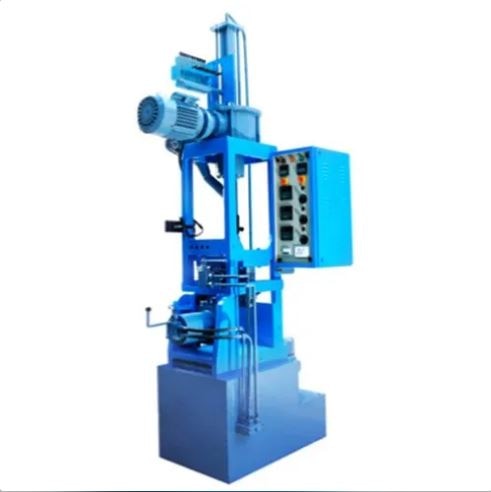 | Injection Molding Machine ₹450000 Clamping Force 100 Ton Automation Grade Semi-Automatic Machine Structure Vertical Machine Weight Monted on Machine Model Name/Number Super Delux... View product → |
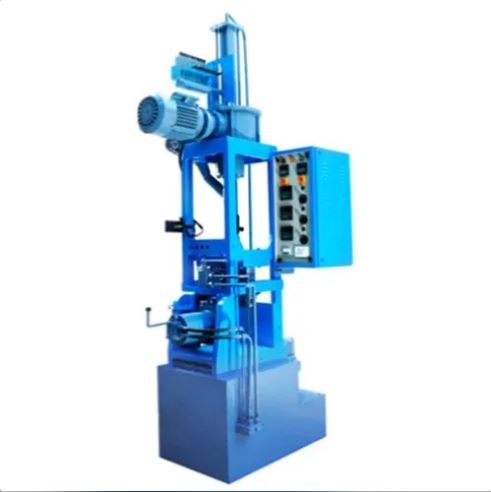 | Vertical Injection Moulding Machine Vertical Injection Moulding Machine ₹500000 Clamping Force 23m/t Material Mild Steel Max. Plasticizing Capacity 60 Kgs/hr Injection Pressure 400 Kgs/cm2 Pump Drive 120 Kgs/cm2 Heating 3.25 K.W. View product → |
Frequently asked questions
What is the difference between a rotary and a standard injection machine?
A rotary machine uses a carousel with multiple mould stations, allowing injection, cooling, unloading and loading to overlap. A standard machine usually completes these tasks at one mould position.
When does a rotary injection machine make sense for footwear production?
Rotary equipment makes sense when steady demand and repeated production justify parallel station work, faster accepted output and the added complexity of multiple mould positions.
What costs should you compare beyond the machine price?
Compare moulds, electricity, compressed air, cooling, spare parts, preventive maintenance, labour, installation and downtime alongside the purchase price.
What should Delhi buyers verify before installing the machine?
Verify the machine’s platen and mould dimensions, electrical load, cooling and air requirements, floor space, access route, commissioning scope and service support before installation.
Related products
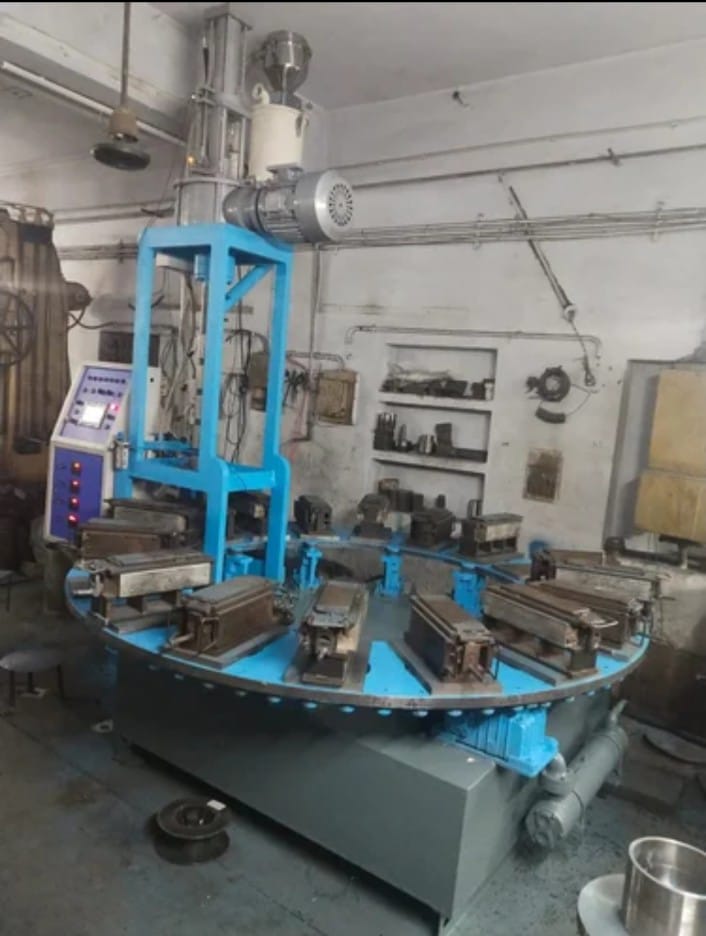 | Automatic Roatary Injection Moulding Machin Automatic Roatary Injection Moulding Machin Automatic Rotary Injection Moulding Machine Automatic Rotary Injection Moulding Machine is designed for high-speed and efficient production of... View product → |
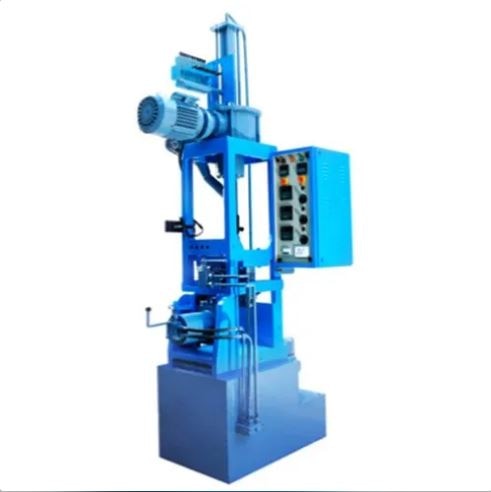 | Injection Moulding Machine VRT 1000 Super Deluxe Vertical Injection Moulding Machine ₹500000 Clamping Force 1000 Material Metal Max. Plasticizing Capacity 100 Kgs/hr Screw Diameter 63.5 mm Brand RAM Maximum Shot Capacity 1000 Grms. View product → |
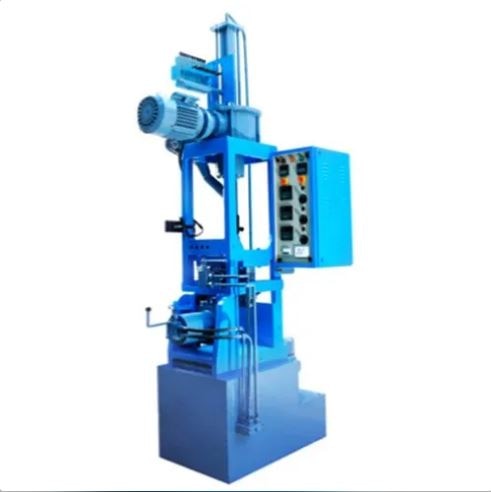 | Injection Moulding Machine VRT Gum Boot Deluxe Vertical Injection Moulding Machine ₹600000 Clamping Force 500 Ton Material Metal Max. Plasticizing Capacity 125 Kgs/hr Screw Diameter 70 mm Number Of Screws Rotations 240 r.p.m Maximum Shot... View product → |
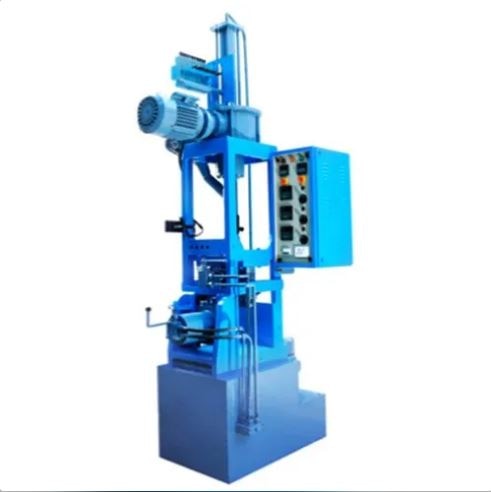 | Injection Moulding Machine VRT 600 Vertical Injection Moulding Machine ₹450000 Clamping Force 500 Ton Material Metal Max. Plasticizing Capacity 60 Kgs/hr Screw Diameter 55 mm Brand RAM Power Source Electric Maximum Shot Capacity... View product → |
Keywords