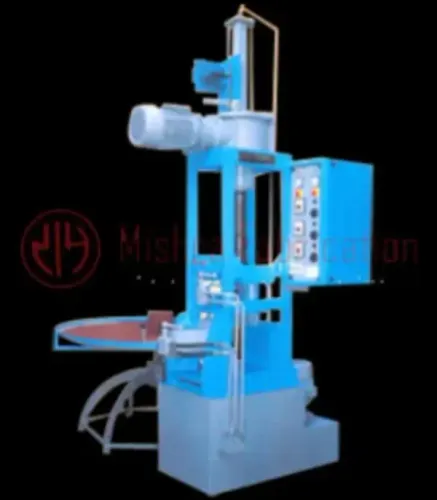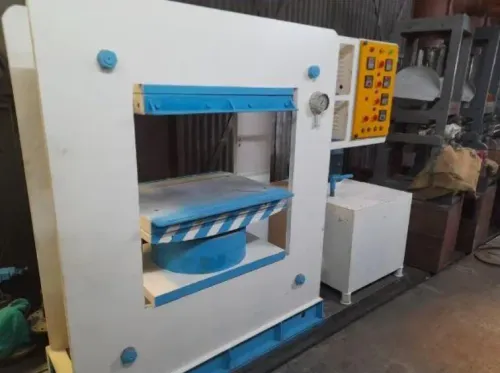
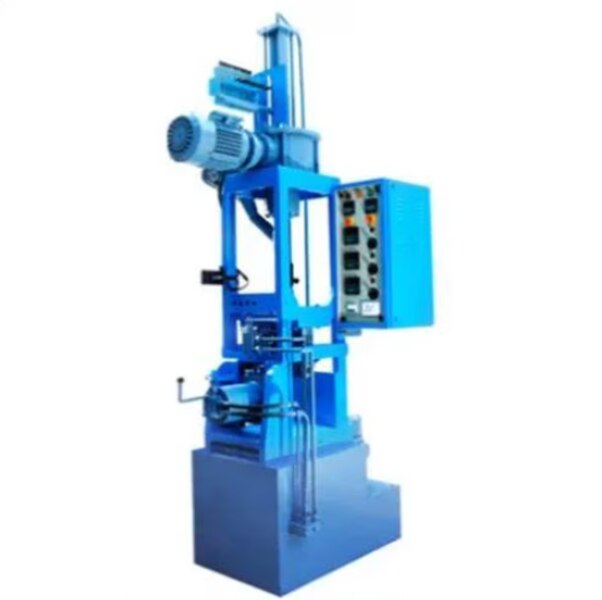
The “1000” designation does not establish the machine’s actual clamping force, and the available product copy leaves out dimensions, process limits, and operating conditions needed for a purchase decision. By checking the force rating, mould envelope, material requirements, shot calculations, utilities, safeguards, and acceptance tests, you can distinguish a suitable machine from an incomplete listing.
Key takeaways
- Confirm whether VRT 1000 means model identity or 1,000-tonne clamping force.
- Match shot size, clamp force, platen size, and mould height to your product.
- Request material temperatures, utility loads, safeguards, and acceptance-test criteria.
- Compare New Delhi suppliers through documented specifications, commissioning, and service support.
What the VRT 1000 designation confirms—and what it leaves unanswered
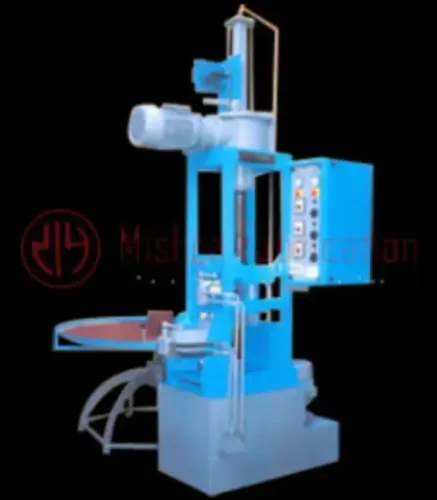
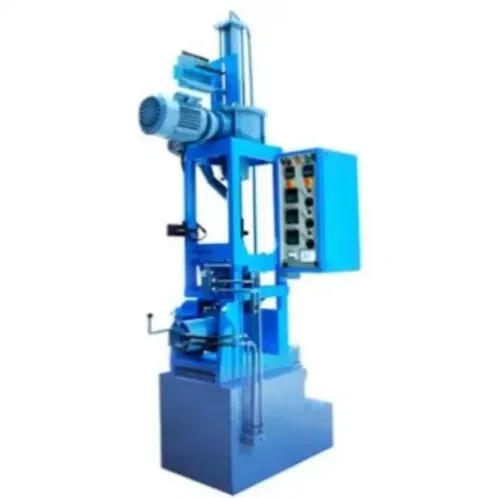
VRT 1000 does not prove a 1,000-tonne machine. The number may identify a model or state nominal clamping force, and “Super Deluxe” is a commercial trim label, not an international performance standard. Treat “vrt 1000 injection moulding machine in New Delhi” as a search term until the model plate and technical offer confirm the configuration.
Request a signed, serial-specific specification sheet containing:
- Clamping force in both tonnes-force and kN: 1,000 metric tonnes-force is about 9,807 kN, while 1,000 kN is only about 102 tonnes-force.
- Injection-unit size, screw diameter, shot volume or mass, maximum injection pressure, injection rate, plasticising rate, and motor power.
- Platen dimensions, tie-bar spacing, mould-height range, daylight, opening stroke, ejector stroke, heating zones, controls, and connected utilities.
- Machine dimensions, floor-loading or foundation drawing, spare-parts list, warranty exclusions, installation scope, and commissioning procedure.
Do not compare brochures that omit these figures. Ask for the exact mould arrangement and intended material class—PVC footwear, EVA components, inserts, or other thermoplastics—then require a production trial using your mould and material. Record cycle time, shot weight, pressure, temperature stability, leakage, repeatability, and product dimensions over a defined run.
How the vertical workflow fits footwear and insert moulding
A vertical cycle suits footwear when the mould opens upward and the operator can load parts from above. With the mould open, the operator places a blank, fabric, shank, metal insert, or preform into the cavity; the table closes, the injection unit fills the cavity, the material cools, and the mould opens for removal.
The machine then repeats the sequence.
- Load the lower mould half and position each insert against its locating features.
- Close the mould and verify that the insert has not shifted or been trapped across the parting line.
- Inject or charge the compound, hold pressure as specified by the process, then allow cooling.
- Open the mould, eject the finished sole or component, remove flash, and reload.
| Mould arrangement | Suitable work | Main trade-off |
|---|---|---|
| Fixed single station | PVC soles, slippers, solid EVA components, and small industrial mouldings | Simple layout, but loading and unloading stop injection |
| Two-station shuttle | Footwear parts with frequent manual insert placement | Faster handling, but shuttle guarding and alignment matter |
| Rotary table | Multi-colour footwear or insert moulding with staged operations | Higher output potential, with more complex controls and maintenance |
A listing for the vrt 1000 super deluxe vertical machine in new delhi does not establish which arrangement is supplied. Match the machine to the buyer’s mould drawing, cavity count, insert shape, and material process—not the model name alone.
Which materials and processing conditions must be confirmed
A vrt 1000 injection moulding machine is suitable only for the compounds named in its validated process sheet, not every thermoplastic. Ask for the exact grade, hardness, additive package, drying requirement, barrel and nozzle temperature range, mould temperature, injection pressure, injection rate, residence time, cooling time, and cleaning procedure.
| Material | Details the supplier must provide | What goes wrong if mismatched |
|---|---|---|
| PVC | Rigid or flexible grade, stabiliser system, processing temperatures, screw and barrel compatibility, and corrosion protection | Degradation, black specks, fumes, or sticking |
| EVA | Grade, foaming or non-foaming process, mould temperature, charging method, expansion allowance, and whether it suits direct soles, components, or preforms | Incomplete fill, incorrect density, oversize soles, or collapse |
| TPR | Exact formulation, hardness, melt range, drying instructions, and required injection pressure | Poor bonding, short shots, or surface defects |
| TPU | Grade, moisture limit, drying temperature and time, melt range, and mould temperature | Bubbles, splay, hydrolysis, or weak parts |
| Other compounds | Polymer name, filler or fibre content, colourant limits, abrasive behaviour, and validated settings | Excessive wear, blocked flow, or inconsistent parts |
Do not accept “PVC/EVA compatible” as a specification. The super deluxe vertical machine specifications should also identify the screw diameter, injection volume, pressure, and speed for each approved material. A solid-EVA setting does not prove suitability for foamed footwear soles.
How to match shot size, clamp force, and mould dimensions
Shot capacity must cover the complete injection, not just one finished part. Calculate total shot weight as part weight multiplied by cavity count, plus runners, sprue and cold slug; then compare it with the machine’s quoted shot mass for your material, leaving operating reserve rather than running at the limit.
1. Weigh one complete moulding and measure the runner system. Multiply the mould weight by the number of cavities, add runner and sprue weight, and request the quoted shot capacity in grams or cubic centimetres for PVC, EVA, TPR, TPU, or your chosen compound.
2. Calculate projected mould area: the area seen from the clamp side, including cavities, runners and sprue. Multiply it by the required average cavity pressure, then add the agreed safety margin. This determines clamp force; shot weight alone cannot prove that the mould will stay closed.
3. Compare the mould with the super deluxe vertical machine specifications. Confirm platen length and width, tie-bar or working-area clearance, minimum and maximum mould height, daylight, opening stroke and ejector stroke.
4. Ask whether those dimensions apply to a fixed platen, shuttle table or rotary table. Obtain the exact injection pressure, injection rate and clamp rating with their units. A “1000” model label does not establish 1,000 tonnes, 1,000 kN or 1,000 grams.
An undersized clamp causes flash; an undersized shot unit produces short fills. A mould that fits the platen can still fail if daylight, ejector travel or tie-bar clearance is insufficient.
Which utilities, safeguards, and acceptance tests belong in the purchase
A listing for “vrt 1000 super deluxe vertical machine in new delhi” is not installation data. Require the serial-specific drawing, floor-loading and foundation details, overall dimensions, electrical voltage, phase, frequency, full-load current, cooling-water flow and temperature, compressed-air pressure, hydraulic-oil grade, and lifting points before delivery.
| Item | Require before installation | Acceptance evidence |
|---|---|---|
| Utilities | Confirm motor power, heater load, cable size, earthing, cooling connections, and service clearances | Machine reaches stated temperatures without voltage drop or overheating |
| Safeguards | Guard interlocks, emergency-stop circuits, mould-protection setting, hydraulic overload protection, heater over-temperature cut-outs, and exposed hot-surface protection | Each device stops or inhibits the hazardous movement during a witnessed test |
| Production trial | Use your mould and approved PVC, EVA, TPR, or TPU compound | Signed results from a continuous production run |
Run at least 30 consecutive cycles with the intended mould and material, not an unloaded dry cycle. Record cycle time, shot weight, peak injection pressure, cushion or end-position repeatability, temperature stability, leakage, mould-protection response, and part dimensions.
- Reject the machine if guards can be bypassed without a controlled reset, the emergency stop fails to remove hazardous motion, or repeated parts fall outside your agreed dimensional and weight limits.
- Obtain the commissioning checklist, calibration records, warranty exclusions, spare-parts list, and signed acceptance report.
How to compare a vertical injection machine supplier in New Delhi
A capable vertical injection machine supplier in new delhi gives you evidence tied to the exact machine, not just a catalogue name. Treat “vrt 1000 super deluxe vertical machine in new delhi” as a search term until the model plate, serial number, and technical offer identify the actual configuration.
| Check | Capable supplier | Model-only listing |
|---|---|---|
| Technical file | Serial-specific drawings, platen and mould-space dimensions, floor-loading data, utilities, and a line-item specification | Generic brochure with missing units or “Super Deluxe” as the main distinction |
| Supply record | Spare-parts list with part numbers, recommended stock, and hydraulic, heater, control, and mould-interface details | No identifiable replacement parts |
| Service terms | Written installation scope, commissioning procedure, warranty exclusions, and response time | Verbal assurance that service is available |
| Acceptance | Buyer’s mould and material used to record cycle time, shot weight, pressure, repeatability, temperature stability, leakage, and dimensions | Unloaded dry-cycle demonstration |
Ask Mishra Fabrication for these documents in the quotation itself, then compare omissions line by line. Confirm whether “1000” means tonnes-force or kN; 1,000 metric tonnes-force is about 9,807 kN, while 1,000 kN is about 102 tonnes-force. A local address proves neither interpretation nor service capacity.
Related product
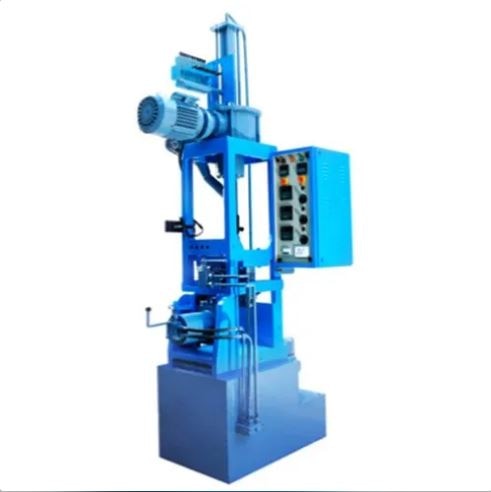 | Injection Moulding Machine VRT 1000 Super Deluxe Vertical Injection Moulding Machine ₹500000 Clamping Force 1000 Material Metal Max. Plasticizing Capacity 100 Kgs/hr Screw Diameter 63.5 mm Brand RAM Maximum Shot Capacity 1000 Grms. View product → |
Frequently asked questions
What does the VRT 1000 designation confirm?
It identifies a model or configuration, but it does not by itself prove 1,000-tonne clamping force. Check the model plate and technical offer.
Why use a vertical injection machine for footwear and insert moulding?
Vertical machines allow the mould to open upward, making inserts easier to position and supporting processes such as sole, slipper, and footwear moulding.
Which material and processing details must you confirm?
Confirm the polymer, melt-temperature range, drying requirements, injection pressure, screw configuration, cycle conditions, and compatibility with PVC, EVA, or other materials.
How do you match a VRT 1000 machine to a mould?
Compare the required shot weight and clamp force with the machine’s rated values, then verify platen dimensions, tie-bar spacing, mould height, daylight, and ejector travel.
What should a machine purchase include?
Specify electrical load, compressed-air and cooling requirements, guarding, emergency stops, interlocks, commissioning, trial parts, repeatability checks, and written acceptance criteria.
Keywords