The right machine depends on whether you are dry-blending additives or melt-compounding EVA resin into a controlled footwear compound. By the end, you will be able to identify the required mixer type, calculate usable capacity, specify Delhi installation needs, and compare suppliers through a production-representative trial.
Key takeaways
- Use dry blending for distribution; choose melt compounding for EVA dispersion.
- Set the mixing sequence from your EVA resin, fillers, pigments and additives.
- Calculate mixer size from usable batch capacity and required finished output.
- Test the formulation before approving an EVA sole mixing equipment supplier.
Choose Between Dry Blending and Melt Compounding
Which mixture machine for EVA footwear production in Delhi should you choose? Match it to the material process, not the footwear machine’s name. Dry blending only distributes powders, pigments, fillers and additives; it does not melt EVA resin or guarantee dispersion.
| Option | What it does | When it applies |
|---|---|---|
| High-speed mixer | Blends dry ingredients through controlled agitation | Use for powder, pigment, filler and additive pre-blending before a separate compounding stage |
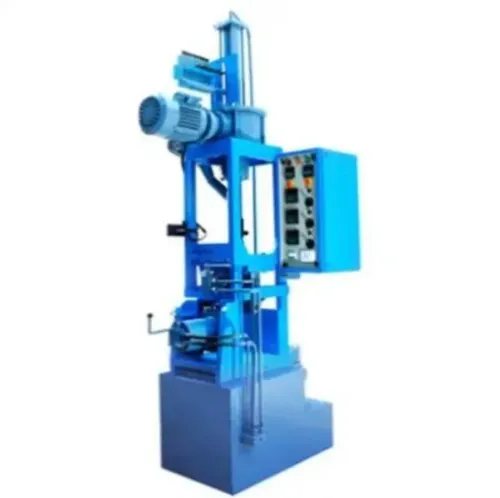
| Internal mixer | Melts EVA and disperses additives under controlled temperature and torque | Choose for complete melt compounding, especially when the forming machine needs consistent compound |
| Kneader | Mixes and heats a viscous formulation with strong shear | Consider for difficult formulations or longer residence time, after a production trial confirms dispersion |
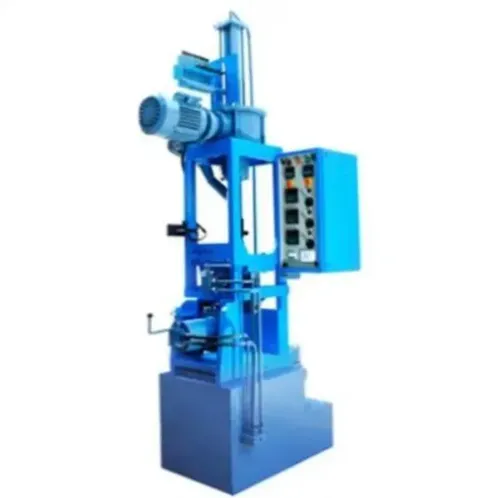
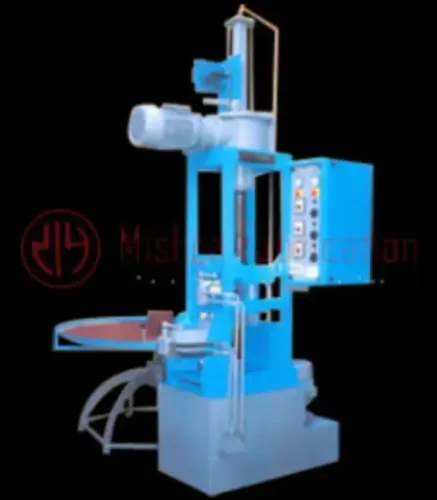
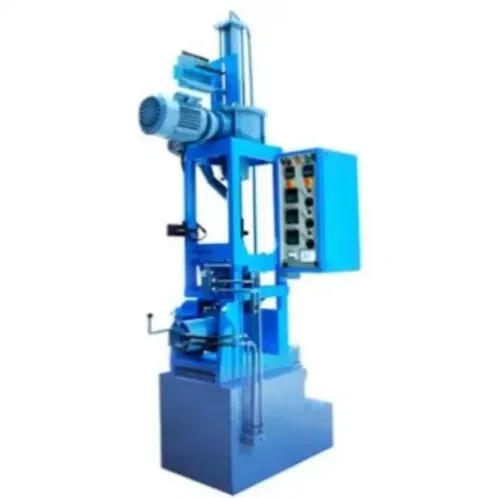
For a mixture machine for EVA footwear, select an internal mixer when the batch must leave as uniform compound for pelletising, granulation or direct forming. A vertical EVA injection machine does not replace this upstream step; feeding inconsistent material creates density, hardness, expansion and cell-structure variation in finished soles.
Before approving an EVA material mixing machine, run your EVA grade and additive package through it. Record batch-to-batch torque, mixing time, discharge temperature, molded density, hardness, expansion ratio, cell uniformity and visible pigment or filler dispersion. Confirm that the discharge path suits your pellet, granule or preform process.
A brochure’s chamber capacity cannot prove material suitability.
Build the Mixing Sequence Around the EVA Formulation
After weighing, dry-blend the EVA resin, pigments, fillers and additives before any melt compounding. A high-speed mixer handles this powder-stage dispersion; it does not replace an internal mixer or the footwear moulding machine.
| Stage | Machine | Required result |
|---|---|---|
| Weighing and dry blending | High-speed mixer | Uniform powder blend without pigment or filler pockets |
| Melt compounding | Banbury-type internal mixer or kneader | EVA melt with controlled torque, temperature and additive dispersion |
| Cooling and sizing | Cooling conveyor, granulator or pelletiser | Compound at a stable temperature, moisture condition and bulk form |
| Moulding | Vertical EVA injection machine, press or specified forming machine | Consistent feed converted into soles or footwear components |
An EVA material mixing machine must discharge below the formulation’s activation window. Azodicarbonamide can release gas too early, while dicumyl peroxide can scorch a crosslinking compound; either failure causes porosity, density variation or unstable expansion. Ask the supplier to run your formulation and record mixing time, torque and measured discharge temperature.
Choose the output form from the forming machine’s feed specification: pellets, granules or preforms. Do not assume a vertical injection machine accepts loose powder. A mixture machine for EVA footwear is only suitable when its cooling, pelletising and feeding stages deliver material with repeatable density and flow.
Specify rotor geometry, speed range, drive torque, chamber volume, batch mass, temperature control and discharge design. Motor horsepower alone cannot prove that the sequence will produce mould-ready compound.
Size the Mixer From Usable Capacity and Finished Output
Calculate demand in kilograms of finished compound, not by the mixer’s advertised chamber volume. For daily planning, use pairs required × two soles per pair × grams per sole, then add a documented allowance for start-up scrap and rejects.
- Select batch mass from the usable working capacity at your EVA formulation’s fill level, not the chamber’s geometric volume.
- Estimate net hourly output as batch mass × completed batches per hour × usable yield.
- Deduct charging, heating, discharge, cleaning, changeover, setup and quality-hold time from each shift.
- Compare that net figure with peak daily demand, then allow capacity for maintenance and rejected batches.
A 100-litre chamber does not establish a 100-litre production batch. Ask for the permitted batch mass, mixing time and measured discharge temperature using your resin, filler, pigment and additive package. An EVA sole mixing equipment supplier that quotes only theoretical batch frequency has not shown finished output.
Motor horsepower alone is a poor comparison between machines. An EVA material mixing machine must also match these operating details:
- Working chamber volume and usable batch mass
- Rotor geometry, speed range and drive torque
- Jacket or chamber temperature control
- Discharge arrangement and cleaning access
- Batch temperature measurement and recording
If the forming line needs 600 kilograms per shift, size the mixer for that quantity after real downtime, not for a brochure’s maximum. A smaller machine running repeatable batches can outperform a larger machine that overloads, overheats the compound or takes too long to discharge.
Specify Temperature, Safety and Delhi Site Requirements
An industrial mixture machine in Delhi will work reliably only when its heat removal, electrical supply, guarding and service access match the production site—not just when its motor rating looks adequate. Specify the working chamber volume, permitted batch mass, rotor geometry, speed range, drive torque, jacket or chamber control, discharge method and measured batch temperature.
| Check | Specify or verify | Failure if ignored |
|---|---|---|
| Thermal control | Heating zones, cooling-water flow and inlet temperature, plus batch-temperature measurement | EVA overheats, cures unevenly or leaves inconsistent density |
| Electrical and drive | Three-phase voltage, full-load current, overload protection and starting load | Trips, torque loss or motor damage |
| Dust and heat safety | Guarded rotors, lid interlock, emergency stop, hot-surface protection and local exhaust at powder charging | Entanglement, burns and airborne powder exposure |
| Site fit | Floor loading, lifting route, maintenance clearance and discharge height | Installation delays or inaccessible seals and blades |
Delhi’s site plan must include ventilation for fumes and dust, a dependable cooling-water connection, and enough clearance to remove the rotor or chamber. Record spare availability for seals, blades, heaters, thermocouples and electrical components before ordering.
For EVA sole mixing equipment, compare finished compound output after charging, discharge, cleaning, setup and quality-hold time. A supplier should run your EVA grade and additive package, then record torque, discharge temperature, mixing time, molded density, hardness, expansion ratio, cell uniformity and filler or pigment dispersion.
Use a Formulation Trial Before Approving the Supplier
Compare suppliers through a production-representative trial, not brochure capacity. To decide which mixture machine for EVA footwear production in Delhi fits, use your own EVA grade, pigments, fillers, blowing agent and peroxide package, then test the compound at the forming machine’s actual feed specification.
| Supplier evidence | Weak answer | Acceptable proof |
|---|---|---|
| Nominal capacity | Chamber volume or maximum batch size | Finished compound output after charging, discharge, cleaning and quality holds |
| Mixer selection | “Suitable for EVA” | High-speed mixer for dry blending, or Banbury-type internal mixer for melt compounding and dispersion |
| Temperature claim | Generic maximum temperature | Recorded discharge temperature below the formulation’s activation window |
| Compound quality | Visual inspection only | Batch torque, mixing time, density, hardness, expansion ratio and cell uniformity |
| Colour changes | Operator cleaning estimate | Removable discharge path, accessible surfaces and a documented purge procedure |
Run at least three consecutive batches. Measure torque and mixing time for every batch, then mould samples and compare density, hardness, expansion ratio, cell structure, moisture condition, pigment dispersion and bulk flow. A failure in one batch matters: premature blowing-agent or peroxide activation can cause scorch, gas loss and unstable sole density.
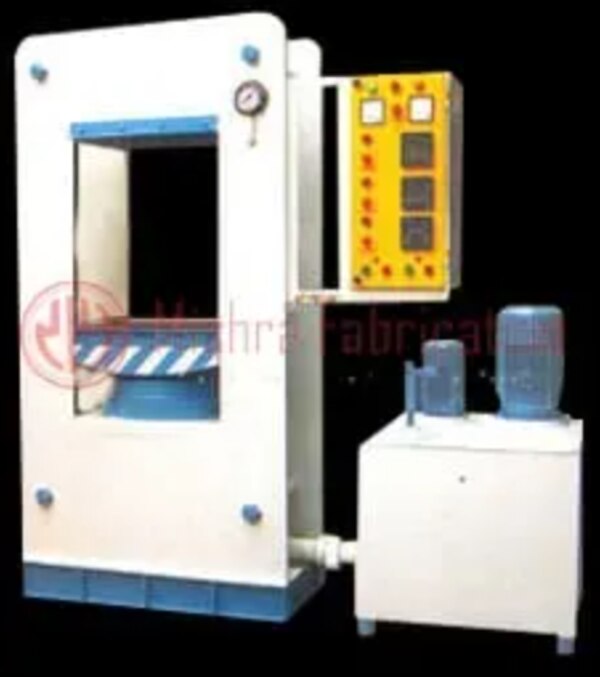
Ask the supplier to pelletise, granulate or form the compound exactly as your forming equipment receives it. If Mishra Fabrication supplies that downstream machine, give its feed dimensions and loading method to the mixer supplier before the trial.
Reject a line that passes laboratory samples but bridges, varies in feed rate or produces inconsistent moulded soles.
Frequently asked questions
Should you choose dry blending or melt compounding for EVA footwear?
Choose dry blending when you only need to distribute powders, pigments, fillers and additives. Use melt compounding when EVA resin must melt and ingredients must disperse through the polymer.
How should you build the EVA mixing sequence?
Set the sequence around the formulation: identify the EVA resin, fillers, pigments and additives, then define when each ingredient enters the mixer and what dispersion the process requires.
How do you size an EVA material mixing machine?
Calculate from usable mixer capacity and finished output, rather than total vessel volume. Match batch size and cycle time to the soles or footwear components you must produce.
What should you check before installing an industrial mixture machine in Delhi?
Specify temperature control, guarding, emergency stops, electrical requirements, ventilation, floor space, access for loading and cleaning, and the site conditions needed for safe operation.
Keywords