Stop resetting the PLC or replacing parts until you record exactly where the cycle stopped and make the machine safe. A structured check of the power, safety chain, hydraulics, heating, mould and material process will help you separate an operator reset from a fault that needs a qualified technician.
Key takeaways
- Lock out electrical, hydraulic and pneumatic energy before inspecting the machine.
- Record the exact cycle step, alarm code and machine conditions at shutdown.
- Check sensors, pressure, heaters, mould alignment and material flow before changing settings.
- Restart at low risk and confirm defects before arranging repair service.
Make the Machine Safe and Record the Exact Stopping Point
Press the emergency-stop button to stop movement, but do not treat it as isolation. Switch off and lock out the main electrical supply, isolate hydraulic power, release accumulator and line pressure, and verify zero energy at the work point with the correct meter and pressure gauge.
A stopped motor can still leave live circuits or stored hydraulic force.
- Record the exact phase where the EVA sole machine stopped: heating, screw recovery, mould closing, injection, mould opening, ejection, or automatic cycle transfer.
- Write down the alarm text and code, set and actual temperatures, hydraulic pressure, oil temperature, motor current, mould number, and material batch.
- Photograph the controller screen, mould position, nozzle area, product defect, and any leaking hose or damaged component.
- Note whether the stop occurred once or repeats at the same position. Do not keep resetting the PLC; repeated resets can erase useful alarm history.
The stopping point narrows the fault faster than replacing parts at random. A cycle that stops during screw recovery points toward dosing, drive, material, or temperature conditions; a stop during mould closing points toward an interlock, hydraulic circuit, obstruction, or position sensor.
This record gives eva sole machine troubleshooting a reliable starting point and helps a technician separate an intermittent wiring fault from a repeatable process failure. Never probe a blocked hot nozzle by hand; trapped molten EVA can remain pressurised.
Find Out Why the Machine Will Not Start
If the control panel is completely dark, check the incoming supply before blaming the motor. Before attempting an eva sole machine for stopped working repair, isolate electrical and hydraulic energy, release accumulator and line pressure, and verify zero energy at the work point. An emergency-stop button does not provide lockout.
| Fault | What you see | What to check |
|---|---|---|
| Complete power failure | Panel, lamps and drives are dead | Isolator position, incoming three-phase voltage, phase loss, control-circuit fuse and control-voltage supply |
| Control-panel fault | Panel has power but commands or display fail | PLC and drive alarms, loose wiring, blown control fuse, failed display or retained recipe |
| Motor or contactor fault | Start command appears but pump motor does not run | Overload relay, contactor coil and contacts, motor-terminal voltage, phase sequence and motor-current alarm |
| Sensor or interlock fault | Panel is live but the sequence will not advance | Door guard, emergency-stop circuit, proximity sensor, encoder status and the PLC input that should change |
Do not reset repeatedly. Record the alarm text and code, actual versus set temperatures, hydraulic pressure, oil temperature, motor current, cycle position and mould number. After a power interruption, verify phase sequence; incorrect wiring can reverse motor rotation.
If a zone keeps heating after its output command switches off, stop the machine and treat it as a welded contactor or shorted solid-state relay, not a calibration error. Send a technician the model, serial number, alarm history and a short video of the stopping point.
Check the Cycle, Hydraulic System, Pneumatics and Mould
If the HMI is live but the cycle will not run, read the safety-chain screen before checking the main fuse. Isolate electrical and hydraulic energy before opening guards or touching fittings; reset emergency stops only after the stopping point is understood.
- Confirm both guard doors are closed, emergency stops reset, the mould is at its required position, and the injection unit and nozzle are in their valid home positions. A failed proximity switch or loose wire can block the cycle without displaying a motor fault.
- Check hydraulic pressure, oil level, leaks, filter indicators and oil temperature. Low pressure, an overheated oil limit or a faulty pressure switch can stop clamping, injection or mould opening.
- Check compressed-air pressure at the regulator, water in the filter bowl, hose leaks and solenoid operation. Pneumatic ejectors, gates or safety pins that do not reach position can prevent the next step.
- Inspect the mould for flash, a trapped sole, foreign material, damaged guide pillars or an obstructed ejector. Verify platen alignment and clamp movement at low speed; never force a jammed mould.
- If the machine closes but will not inject, inspect the nozzle tip, sprue, gate and cold slug after isolation. Never probe a hot nozzle by hand because pressurised molten EVA can remain inside.
For eva sole machine breakdown help, record the alarm code, cycle position, hydraulic pressure, oil temperature, mould number and a short video. Send the machine model, serial number and schematics to the technician, and confirm that the visit covers PLC, hydraulic, pneumatic and mould checks.
Test Heating, Injection and Material Flow Before Changing Settings
A normal screw-recovery stroke does not prove that the screw seals during injection. A short shot can come from lost heat, restricted material flow, a leaking nozzle, or worn injection components.
1. Compare every heating-zone reading with the last approved recipe. If the display looks normal but the compound stays cold, have a qualified person check thermocouple location and polarity, heater-band current, SSR or contactor output, and loose terminals. A controller display alone cannot prove that heat reaches the barrel.
2. Inspect the nozzle for a cold, solid EVA plug, blockage, or a shut-off nozzle that leaks during recovery or injection. A restricted nozzle causes poor filling; a leaking shut-off reduces the material entering the mould.
3. Watch dosing and feeding during recovery. Material bridging at the hopper throat, an empty feed pocket, inconsistent dosing, or a slipping drive gives variable shot weight even when the screw appears to recover normally.
4. If shot weight remains low, check the non-return valve, screw and barrel for wear, then verify decompression. A worn valve or excessive decompression lets melt flow backward instead of forward, producing short shots and poor density.
5. Compare mould temperature, compound temperature, injection speed, holding or curing time, and demoulding timing with the approved recipe before changing pressure. For foamed EVA, pressure alone can move shrinkage or incomplete filling into a density or cavity-variation defect.
Record shot weight, recovery position, injection pressure, actual temperatures, and the failed cavity. Stop changing settings when the same symptom follows a confirmed component fault.
Restart Safely and Diagnose Defects Before Calling for Service
After a safe restart, run one controlled cycle against the last approved recipe, mould, and material batch; do not correct a defect by changing pressure alone. Inspect purge material for burnt specks, unmelted pellets, discoloration, or unusual viscosity because a long hot residence time degrades EVA, while a cold stoppage can leave a solid plug.
| Defect | Compare after restart | What the comparison suggests |
|---|---|---|
| Inconsistent size or shrinkage | Mould and compound temperatures, injection speed, holding or curing time, and demould timing | Recipe, sensor, or curing-history fault |
| Weak bonding or incomplete fill | Actual temperatures and fill position against setpoints | Cold material, restricted nozzle, poor dosing, or interrupted heating |
| Burns or dark marks | Purge appearance and each heating zone’s actual temperature | Degraded compound or a zone heating after its output command is off; stop for over-temperature risk |
| Air marks | Vent condition, injection speed, and mould closing position | Trapped air, blocked venting, or incorrect closing sequence |
| Flash | Clamp position, mould separation, and injection pressure | Mould damage, misalignment, or excessive pressure |
| Cavity-to-cavity variation | Cavity, gate, temperature, and fill results | Uneven flow, blocked gate, or sensor/wiring fault |
Record the alarm text and code, actual versus set temperatures, hydraulic pressure, oil temperature, motor current, cycle position, mould number, material batch, and clear defect photographs. Send the machine model, serial number, controller and drive brands, schematics, alarm history, spare-parts list, and a short stopping-point video.
For sole machine service in delhi, confirm whether the visit includes PLC diagnostics, hydraulic and heater checks, mould inspection, and recommissioning under production load. Whether you contact Mishra Fabrication or another provider, send this record before booking.
Related products
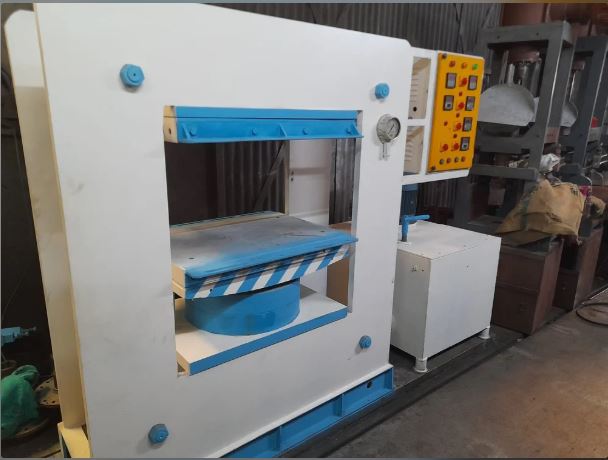 | Automatic Sole Pressing Machine ₹550000 Capacity(Pairs/Hour) 900 Production Capacity 900 Power Consumption 21 kw Weight 3 ton Country of Origin Made in India Established in the year 1970,... View product → |
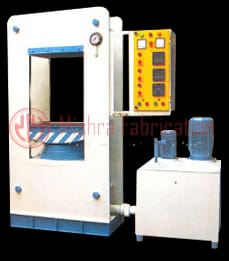 | EVA Forming Machine EVA Forming Machine is designed for efficient shaping and forming of EVA materials used in footwear, slippers, soles, sports shoes, and other molded... View product → |
Frequently asked questions
What should you do first when an EVA sole machine stops working?
Press the emergency stop, isolate and lock out the main electrical supply, isolate hydraulic power, release stored pressure, and verify zero energy before inspection.
Why will an EVA sole machine not start?
Check the emergency-stop circuit, safety guards, door switches, control power, alarms, sensors and start conditions recorded by the controller.
Which systems should you check during EVA sole machine troubleshooting?
Inspect the cycle sequence, hydraulic pressure, pneumatic supply, mould closure and alignment, heater operation, injection system and material flow.
When should you call for EVA sole machine breakdown help?
Call for service after safe checks identify persistent alarms, pressure loss, electrical faults, damaged heaters, injection problems or defects that remain after controlled testing.
Keywords