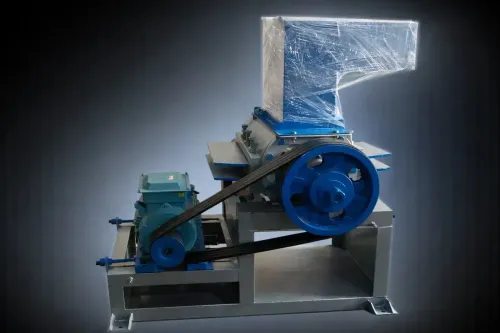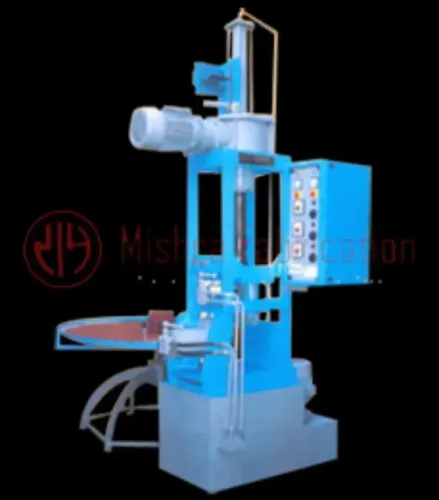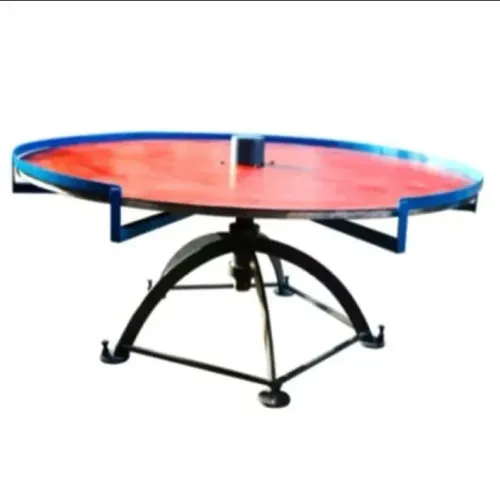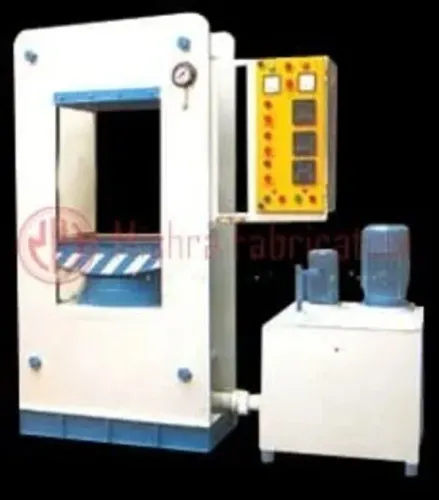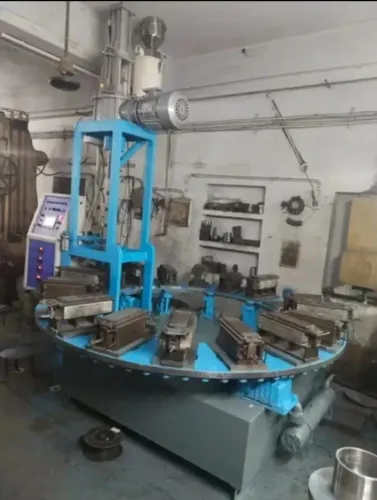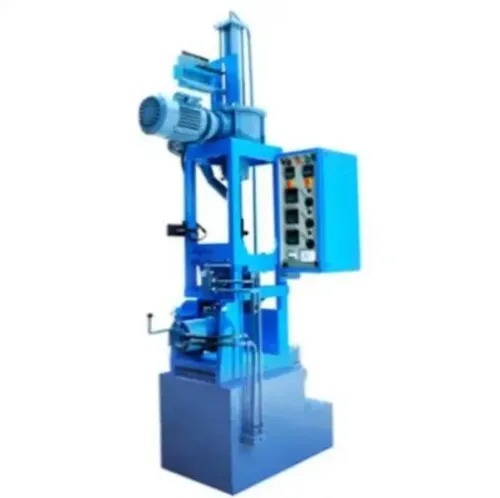
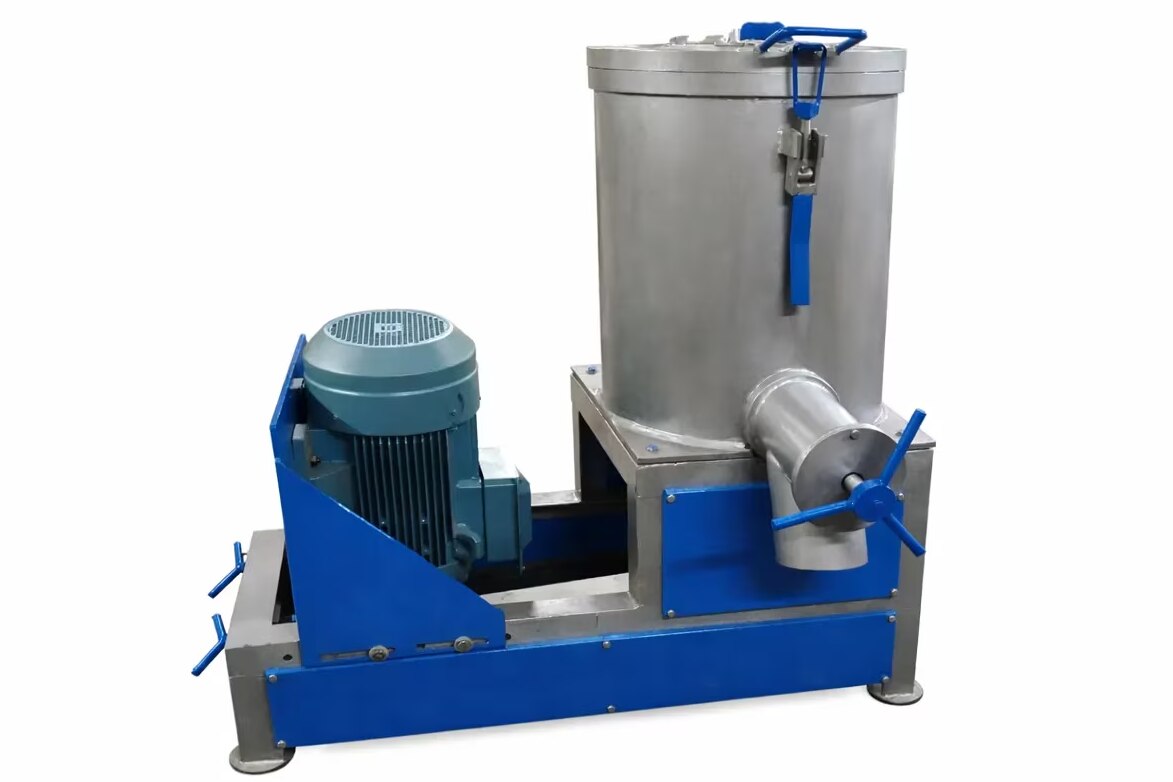
A Delhi quotation for a “mixture machine” is not meaningful until you identify the mixer design, material, working batch and complete cycle time. By the end, you will be able to estimate a realistic budget, compare usable capacity and specifications, and check whether a Delhi or NCR supplier can prove suitability for your formulation.
Key takeaways
- Choose the mixer by material, moisture, batch size and required shear.
- Compare usable batch volume, motor power and hourly throughput separately.
- Demand a material trial proving cycle time, blend uniformity and discharge.
- Check the supplier’s installation, spare-parts and service commitments in writing.
Which Type of Mixture Machine Do You Need?
Choose the machine by process, not by the label “mixture machine.” A plastic material mixing machine in delhi may mean a high-speed dry mixer, hot-and-cool mixer set, ribbon blender, tumble mixer, sigma kneader or Banbury/internal mixer.
| Type | Best suited to | Important limitation |
|---|---|---|
| High-speed dry mixer | PVC resin, plasticiser, stabiliser, lubricant, pigment and filler powders | Needs cooling after the hot stage |
| Hot-and-cool set | PVC dry blends for footwear or injection moulding | Costs more than one standalone mixer |
| Ribbon or tumble mixer | Free-flowing powders, pellets and additives | Not suitable for intensive melt compounding |
| Sigma kneader | High-viscosity EVA, soft PVC or rubber-like compounds | Higher torque, power and cleaning time |
| Banbury/internal mixer | Intensive kneading and melt compounding | Does not replace later extrusion or forming equipment |
PVC formulations usually need a hot mixer to distribute plasticiser and additives, followed by a cooling mixer before storage or feeding. The cooling stage prevents a hot blend from compacting, sticking or changing during storage.
For EVA or soft PVC footwear compounds, confirm whether you need dry blending, plasticisation or kneading. A dry blender homogenises pellets, powder and additives; it cannot replace an extruder, two-roll mill, kneader or injection unit when the formulation must melt or plasticise.
Before asking a mixture machine supplier in delhi for a quotation, state the material form, full formulation, batch mass, target temperature and intended downstream machine. Add required cycles per hour, electrical supply, contact-part grade, dust control and PLC/HMI requirements so suppliers compare the same process.
What Does an Industrial Mixture Machine Cost in Delhi?
A small high-speed plastic mixer for 10–25 kg working batches budgets at approximately ₹1–3 lakh. Units handling about 50–100 kg often fall near ₹3–8 lakh, while a 200–300 kg-class PVC hot-and-cool line commonly sits around ₹10–25 lakh. These are planning bands, not firm Delhi quotations.
The industrial mixture machine price rises with working batch size, motor and drive, vessel and blade material, heating and cooling, automatic temperature-based discharge, PLC/HMI controls, dust extraction, conveying, material handling and fabrication quality. A hot-and-cool line costs more because it heats the PVC blend, transfers it to a cooling mixer and controls the discharge temperature.
Compare every quotation using this checklist:
- Confirm whether GST, freight, unloading, erection, electrical cabling and commissioning are included.
- Check whether dust collection, conveying, automatic discharge controls and the first set of blades, seals and other wear parts are included.
- Record the quoted working batch, cycle time, motor rating, vessel construction, electrical supply and warranty scope.
Reject “100 kg capacity” as an incomplete claim. Ask for gross vessel volume, usable working fill, material bulk density, complete cycle time, discharge temperature and all included equipment. A mixer that holds 100 kg by volume may produce less per batch once safe filling and powder expansion are considered.
When comparing a mixture machine price and supplier in Delhi, compare these line items—not only the headline price.
How Do You Compare Capacity, Power and Throughput?
Compare usable kilograms per complete cycle, not the vessel’s advertised capacity. A machine marked “100 kg” can deliver less if its safe loading factor is 60–75%; overfilling restricts circulation, creates dead zones, raises dust escape and torque, and produces uneven discharge.
Use this planning calculation:
Required working batch mass = hourly output ÷ achievable complete cycles per hour
Cycles per hour = 60 ÷ full cycle time in minutes
Count charging, mixing, heating, cooling, discharge and cleaning in the full cycle. Then check bulk density and loading factor:
Usable volume = vessel volume × loading factor
Batch mass = usable volume × bulk density
| Figure to compare | What it tells you | What goes wrong if ignored |
|---|---|---|
| Vessel capacity and working volume | Safe fill and actual batch size | Nominal capacity overstates output |
| Motor power and starting torque | Load capability for the formulation | High-density powder can stall the drive |
| Mixing speed and blade or ribbon design | Shear, circulation and blend quality | Slow or unsuitable geometry leaves unmixed zones |
| Heating and cooling provision | Temperature control and discharge readiness | PVC blend timing becomes inconsistent |
| Discharge-door type | Speed, sealing and residue removal | Material remains trapped or leaks as dust |
| Electrical supply, dimensions and weight | Installation requirements | The machine may not fit or match your power |
Also request overload protection, contact-part grade and temperature-probe accuracy. Motor size must match formulation torque and density, not vessel volume alone. Use these figures when comparing an industrial mixture machine price or a plastic material mixing machine in Delhi.
What Should the Mixing Cycle and Material Trial Prove?
A valid material trial proves both the compound result and the complete production cycle, not merely that the blades turn. Use this procedure before approving a plastic material mixing machine in Delhi:
1. Inspect and charge the buyer’s actual PVC, EVA, rubber-like compound, masterbatch, fillers, additives, pellets or powders. Confirm whether the process is dry blending, plasticisation or kneading; a dry blender cannot replace a kneader, extruder or injection unit when melting is required.
2. Record mixing time, heating time where applicable, and the full temperature profile. Transfer the batch to cooling, discharge it, remove residue and include cleaning and formulation changeover before calculating cycles per hour. A quoted cycle that omits these steps exaggerates throughput in a footwear plant feeding injection moulding machines.
3. Run several batches and record blend uniformity, temperature variation, complete cycle time, electrical power draw, discharge residue and repeatability. Set acceptance limits against the buyer’s formulation, such as a specified temperature band and permitted sample variation, rather than accepting “industrial mixer” as evidence.
4. Inspect shaft seals for leakage, blades for wear, bearings for heat, the temperature probe for accuracy, the discharge door for sealing, the vessel bottom for dead zones, and charging and discharge points for escaping dust.
Request this written trial report from every mixture machine supplier in Delhi. Compare usable kilograms per complete cycle and repeatable hourly output, not nominal batch kilograms or an empty-machine demonstration.
Where Should You Buy and How Do You Check a Delhi Supplier?
Shortlist a mixture machine supplier in Delhi by verifying who builds the equipment, who services it, and what the quoted batch can actually produce. Searches also return traders and fabricators in Bawana, Mundka, Nangloi, Narela, Badli, Sahibabad and Ghaziabad, so confirm the fabrication location and whether work is done in-house.
Ask each supplier for these details:
1. Service and support: service territory, installation and commissioning scope, written warranty, response time, spare-blade and seal availability, and references running a similar PVC, EVA or footwear formulation.
2. Technical offer: material and powder or pellet form, batch mass, complete cycles per hour, acceptable temperature variation, contact-part grade, electrical supply, PLC/HMI requirements and dust-control arrangement. A live trial using your formulation should record usable output, temperature consistency and repeatability across several batches.
3. Commercial offer: require an itemised quotation that names GST, freight, unloading, erection, cabling, commissioning, dust collection, conveying and initial wear parts. Every excluded cost must appear in writing; otherwise a low mixture machine price and supplier in Delhi may only be low because essential work sits outside the quote.
Mishra Fabrication is one supplier to evaluate alongside other Delhi-NCR options, not proof of suitability. Request its formulation-specific trial, complete technical offer and itemised quotation before comparing machines.
Choose the supplier that demonstrates the required usable throughput and repeatable compound result. Do not select the lowest quoted machine price if its cycle excludes cooling, discharge, cleaning or changeover losses.
Related product
 | Mixture Mishra Fabrication is a trusted name in manufacturing high-performance Mixture Machines, designed to deliver efficient, uniform, and fast mixing for... View product → |
Frequently asked questions
Which type of mixture machine do you need?
Match the machine to the process: use high-speed or hot-and-cool mixers for plastic compounds, ribbon blenders for powders, tumble mixers for gentle blending, sigma kneaders for high-viscosity materials, and Banbury or internal mixers for intensive rubber and polymer compounding.
What does an industrial mixture machine cost in Delhi?
The industrial mixture machine price depends on mixer type, usable capacity, motor rating, heating or cooling systems, controls, construction material and automation. Request an itemised quotation that separates the machine, electrical panel, installation, transport, taxes, tooling and warranty.
How should you compare capacity, power and throughput?
Compare usable batch volume rather than vessel volume, then check motor power, loading limits, cycle time and actual kilograms per hour. Ask the supplier to state the tested material, batch weight, mixing time and discharge time behind the throughput figure.
What should a mixing cycle and material trial prove?
A trial should use your actual material and recipe and record loading sequence, mixing time, temperature, motor load, discharge condition and blend uniformity. Approve the machine only when the sample meets your colour, moisture, dispersion and output requirements.
How do you check a mixture machine supplier in Delhi?
Inspect a working machine, request customer references using similar materials, verify the quotation and warranty, and obtain written details for installation, operator training, spare parts, response times and preventive maintenance.
Keywords