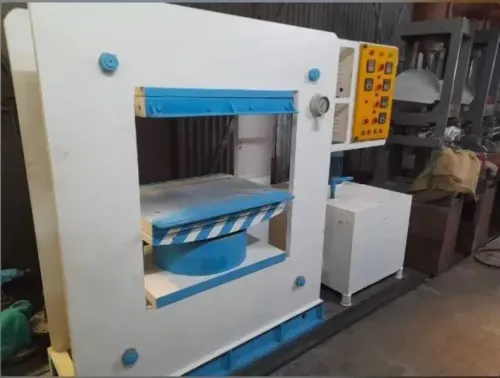
A quotation for a dumbbell machine can cover only the press, while moulds, cooling equipment, material preparation and installation remain separate costs. By checking the product construction, scope of supply, measurable specifications, workflow and site responsibilities, you can compare Delhi quotations on a production-ready basis.
Key takeaways
- Identify the dumbbell material before choosing casting, forging or coating equipment.
- Request the complete machine package, mould list and utility requirements in writing.
- Compare clamping force, injection capacity, cycle time and mould dimensions—not motor power alone.
- Confirm transport, installation, commissioning, training and site-preparation responsibilities before payment.
First identify the dumbbell construction and process
Name the finished dumbbell before comparing any gym equipment manufacturing machine. A cast-iron dumbbell may require casting or forging; a rubber-coated model may require an iron core and rubber moulding; a PVC-coated cement dumbbell may require batching, filling, heating and coating.
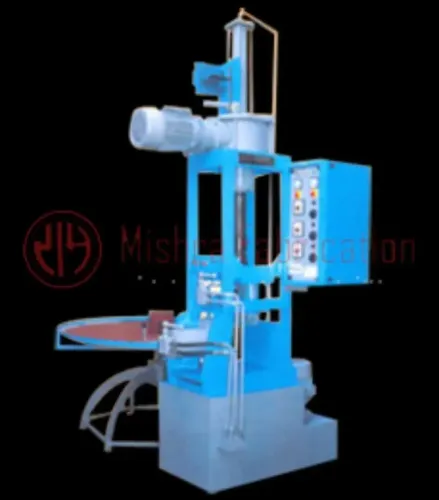
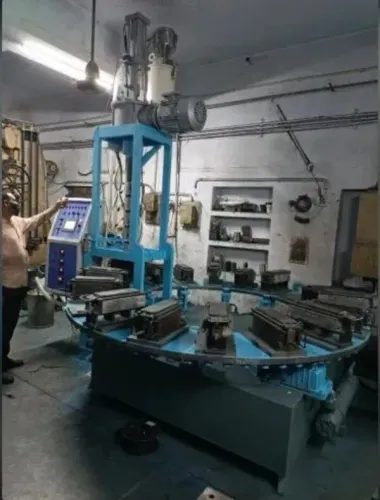
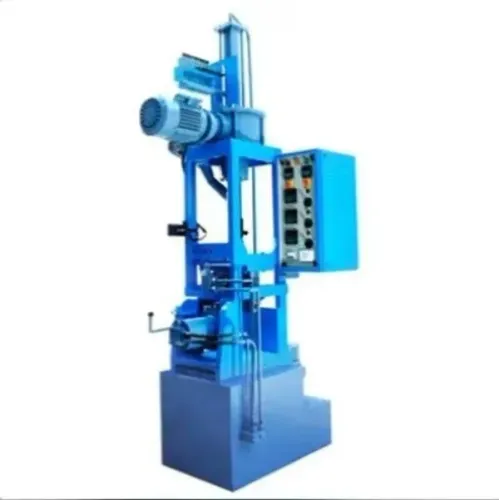
A vertical injection moulding machine is mainly suited to plastic-bodied products or plastic overmoulding, not every dumbbell design.
| Construction | Main process | What the machine actually does |
|---|---|---|
| Cast iron | Casting, fettling and machining | Forms or casts the metal body; finishing and weighing remain separate |
| Rubber-coated iron | Core preparation and rubber moulding | Moulds rubber around the core; core fitting, trimming and inspection remain |
| PVC-coated cement | Mixing, filling, heating or curing | Forms the outer shell or coating; cement batching, core loading and curing may need separate equipment |
| Plastic-filled | Injection moulding | Melts and injects plastic into the mould, holds pressure, cools and ejects the part |
Ask the supplier to state the intended material, dumbbell weight range, handle dimensions, mould cavities and production cycle. The machine does not automatically guarantee a straight handle, repeatable mass, coating adhesion, low odour or impact resistance.
Test the actual design and material in a factory acceptance run, recording part weight, dimensions, surface defects, demoulding, cycle time and scrap rate. A catalogue figure for clamping force or injection pressure cannot prove usable output.
What belongs in the standard machine package
A quotation for a dumbbell making machine for included items in Delhi must define the process before it defines the package. Injection moulding suits plastic or PVC-bodied and overmoulded dumbbells; cast iron, cement-filled, dipped rubber and polyurethane products need different equipment. “Complete machine” does not include a production mould by default.
Request these entries by name in the written scope of supply:
- Machine body, injection unit, clamping unit, motor, hydraulic or pneumatic power pack, hopper, heaters, thermocouples, temperature controller and electrical panel
- Production mould or die, cavity count, core and cavity inserts, runners or hot runner, ejector arrangement, cooling manifolds, hoses and mould-height hardware
- Mixer, preheating unit, dryer, chiller, compressor, granulator, weighing system, conveyor and trimming tools, each marked included, excluded or not applicable
- Installation hardware, operating and electrical manuals, commissioning, operator training, initial spare parts and acceptance-test support
A vertical injection machine can form the outer shell while filling, metal cores, curing, trimming and packing remain separate operations. That distinction prevents a low machine price from being mistaken for a complete line of dumbbell production machinery.
| Item | Standard scope | Optional or separate line |
|---|---|---|
| Base machine | Injection or forming unit, drive, controls, hopper and ejector | — |
| Moulding set | Named mould, cavities, inserts, runners and cooling connections | Additional sizes, cavities or replacement inserts |
| Utilities | Heaters and control wiring | Dryer, chiller, compressor, mixer and granulator |
| Support | Manuals, commissioning and training | Freight, installation travel, extended warranty and spare-parts kits |
Compare moulds and dumbbell machine specifications
A mould defines the dumbbell you can sell, not just its appearance. A fixed-weight hexagonal dumbbell, round dumbbell, adjustable component, or different handle diameter normally needs different cavities, inserts, or a separate mould. Confirm the parting line, insert-loading method, ejector arrangement, cooling layout, and changeover procedure before comparing dumbbell machine specifications.
| Product design | Mould requirement | Production effect |
|---|---|---|
| Fixed-weight hex dumbbell | Dedicated hexagonal cavity and handle geometry | Produces one defined weight per cavity |
| Round dumbbell | Round cavity, different support and demoulding surfaces | Requires another mould or insert set |
| Adjustable dumbbell component | Smaller parts and compatible handle interfaces | Produces components, not a complete fixed-weight dumbbell |
| Multiple weights | Interchangeable inserts or separate cavities | Increases changeover time and mould cost |
Cavity count controls output only when the machine can fill and cool every cavity evenly. Four cavities can produce four parts per cycle, but an uneven runner, poor temperature balance, or difficult ejection raises scrap and reduces usable output. Ask for tested parts per hour, cycle time, scrap rate, and continuous-run results.
Compare these figures on the same material basis:
- Injection capacity or shot weight, with the resin named; shot weight is not finished dumbbell weight.
- Clamping force, platen dimensions, daylight, maximum mould height, injection pressure, screw diameter, injection speed, and temperature-control zones.
- Motor or servo rating, connected load, voltage, phase, machine dimensions, and machine mass.
Require sample parts showing mass repeatability, handle straightness, surface finish, coating adhesion, and demoulding performance.
Follow the production workflow from material to packed dumbbell
A packed dumbbell is the end of a chain, not proof that the press performed every operation. Start with the specified polymer or compound: dry hygroscopic TPU or polyurethane in a controlled dryer, then mix pigments, additives, or rubber compound before charging the hopper.
PVC and other materials still need the supplier’s stated temperature and moisture limits.
| Stage | Machine handles | Operator or auxiliary work |
|---|---|---|
| Material preparation | Hopper charging and metered injection | Drying, mixing, batch identification, and material checks |
| Moulding | Clamping, filling, heating, cooling, or curing where designed, then ejection | Mould installation, insert loading, and cycle verification |
| Finishing | Ejection of the formed dumbbell | Trimming flash, deburring, cleaning, and coating or painting |
| Inspection and packing | Repeatable cycle control only | Weighing, dimensional checks, drop testing, labelling, carton packing, and palletising |
A mould-temperature controller or chiller stabilizes finish and cycle time; a compressor supports pneumatic ejectors or core pulls. Provide suitable three-phase power, water, compressed air, ventilation, floor space, and lifting access in Delhi. A granulator, conveyor, weighing scale, dryer, mixer, and trimming tools are separate line items unless the written scope names them.
Test dumbbell production machinery with the intended mould, material, and operators during a factory acceptance run. Record:
- Actual mass and dimensional repeatability
- Handle straightness, surface defects, flash, odour, tack, and coating adhesion
- Demoulding performance, scrap rate, cycle time, and impact resistance
- Continuous production over a representative run, with each batch and cavity identified
A catalogue clamping force or injection pressure is not an hourly output claim. Verify cavity count, accepted cycle time, usable weight range, and packed-good quantity in the run.
Confirm Delhi site, commissioning and commercial responsibilities
Before placing the order, sign a Delhi-site responsibility sheet that names who supplies each utility, moves the machine into position, commissions it and pays each charge. Compare every dumbbell machine supplier in delhi against the same written terms, not against a headline machine price.
1. Record three-phase voltage, connected load, earthing, water quality and flow, compressed-air pressure, ventilation, floor area, foundation and lifting access. State whether the buyer provides a dryer, chiller, mould-temperature controller, compressor, mixer or trimming tools.
2. Separate machine price, mould price, cavity inserts, auxiliary equipment, freight, insurance, unloading, installation, commissioning, GST and other taxes. The quotation must state whether the mould, cooling manifolds and hoses, electrical panel, manuals and starter spares are included.
3. Define delivery responsibility: named Delhi address, packaging, transit risk, unloading equipment, delivery date and storage requirements. Confirm who pays for damage inspection and replacement parts.
4. Attach acceptance tests to the dumbbell machine specifications. Test the agreed material, weight range, cavity count, cycle time, coating thickness, dimensions and defect limits using a signed sample run.
5. Specify installation, operator training, safety guards, emergency stop checks, lockout procedure and electrical inspection. Training must cover startup, mould change, cleaning and fault recovery.
6. Write the warranty period, exclusions, response time and service location. List stocked heaters, thermocouples, seals, hydraulic parts, controller parts and mould inserts; proprietary imports can turn a cheap machine into costly downtime.
Mishra Fabrication should be asked to identify these responsibilities in its quotation rather than leaving “complete machine” undefined.
Related product
 | Mishra Fabrication is a trusted manufacturer and supplier of high-performance Dumbbell Making Machines designed for efficient production of gym... View product → |
Frequently asked questions
What construction should you identify before selecting dumbbell production machinery?
Identify whether the finished dumbbell is cast iron, forged steel, rubber-coated, or PVC-coated cement. Each construction uses a different process, including casting, forging, rubber moulding, batching, filling, heating or coating.
What should a standard dumbbell machine package include?
Request an itemised list covering the main machine, moulds, control panel, material-feeding equipment, heating or cooling equipment, tools, spare parts, manuals and commissioning support. Do not treat accessories as included unless they appear on the quotation.
Which dumbbell machine specifications should you compare?
Compare clamping force, injection capacity, injection pressure, screw diameter, platen and mould dimensions, cycle time, temperature-control range, installed power and compatible materials. Match each figure to your intended dumbbell size and construction.
What is the basic workflow for producing a PVC-coated cement dumbbell?
Batch and weigh the cement mixture, fill the mould, allow it to set or cure, prepare the surface, apply the PVC coating, inspect dimensions and finish, then pack the completed dumbbell.
What Delhi site and commissioning details belong in the purchase agreement?
Confirm the delivery address, unloading access, foundation and floor requirements, electrical supply, compressed-air or cooling-water needs, installation date, operator training, trial production, acceptance criteria and responsibility for transport, taxes and service visits.
Keywords