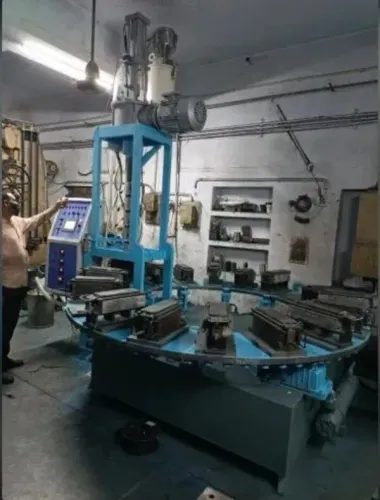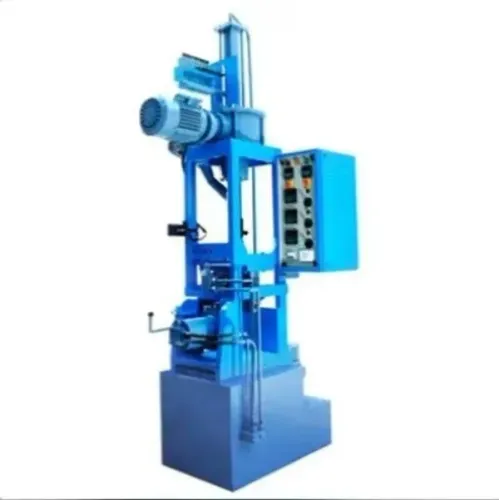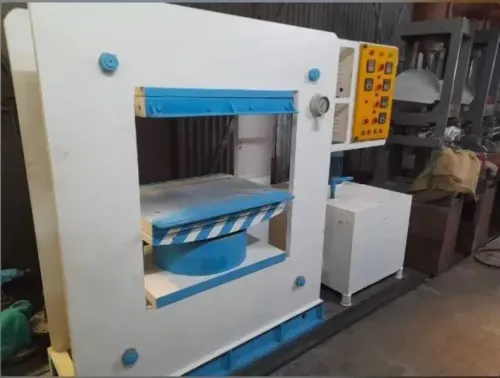
A VRT 600 needs a maintenance plan tied to operating hours, material, mould configuration and measured machine behaviour—not a generic calendar copied from another press. By following the schedule, cleaning procedure, inspection records and restart checks below, you can reduce contamination, unstable cycles, avoidable hydraulic faults and unsafe mould operation in a Delhi factory.
Key takeaways
- Base maintenance on machine hours, material, moulds and the OEM manual.
- Clean PVC and EVA residue before it hardens around the barrel and mould.
- Check hydraulic leaks, wiring, heaters and temperature trends before failure.
- Call for servicing after abnormal pressure, movement, temperature or electrical readings.
How should you schedule VRT 600 maintenance by shift, week and year?
Base the calendar on machine hours, material, mould configuration and the OEM manual, not on the VRT 600 model name alone. Do not invent oil grades, pressure settings, torque values or fixed intervals; shorten intervals for abrasive compounds, PVC, high dust, long shifts or frequent mould changes.
1. Every shift, before production, check guards, emergency stops, gate switches and the mould area. Record cycle time, shot consistency, barrel-zone temperatures, oil level, pump or motor noise, leaks, alarms, screw rotation behaviour and visible contamination.
2. Daily, clean spilled resin, inspect electrical-cabinet filters under Delhi’s dust load, check hoses and fittings for fresh leakage, and review the previous shift’s alarm log.
3. Weekly, inspect filter indicators, grease points, tie bars, moving-platen guides, hinges, ejector movement, mould bolts, nozzle condition, and cable and thermocouple connections.
4. Monthly, take an oil sample for a particle-count test, inspect hydraulic filters, check terminal condition, verify temperatures with an independent calibrated instrument, and compare motor current and peak pressure with the known-good baseline. This is essential VRT 600 machine care, not cosmetic cleaning.
5. Annually, follow the OEM service manual. Have a qualified technician inspect hydraulic, electrical, mechanical and safety systems; VRT machine servicing must include guards and interlocks.
6. Every entry must show the date, machine hours, material and grade, mould ID, readings, alarm codes, parts replaced, safety-test results and technician’s name. Rising cycle time or peak pressure signals gradual wear; a sudden alarm or contamination event needs faster investigation.
How do you clean the VRT 600 after PVC, EVA or other plastics processing?
A hot, stagnant PVC charge can degrade into hydrochloric-acid-containing fumes and corrosive residue, damaging the screw, barrel, nozzle, heaters and nearby metalwork. Treat purge work as essential plastic injection machine upkeep, not a cosmetic cleaning task.
1. Follow the material supplier’s approved purge compound, temperature range and maximum-residence-time procedure. Do not substitute an EVA purge for a PVC procedure; EVA has its own purge and temperature-history limits.
2. Isolate the VRT 600, remove leftover pellets, fines and bridging material from the hopper, then inspect the throat for compacted resin and moisture.
3. Purge the barrel and screw with the approved compound. Examine the discharged material for black specks, hard deposits and colour streaks; these indicate degraded resin or incomplete cleaning.
4. Isolate and cool the machine according to the service procedure. Inspect the nozzle tip, sprue contact area and heater bands for baked residue, removing deposits with approved non-damaging tools. Do not scratch sealing surfaces, dismantle a hot nozzle or open a pressurised barrel.
5. Clean insert pockets, slides, guide pillars and ejector surroundings. Delhi dust mixed with grease forms an abrasive paste that accelerates wear.
6. Dispose of contaminated purge safely, ventilate the area and record the material grade, purge compound, temperatures, residence time and result. This record strengthens VRT 600 machine care and helps trace later shot defects.
Which hydraulic, electrical and temperature checks reveal an approaching fault?
Hydraulic, electrical and temperature checks expose contamination, unstable power and control faults before they become downtime. For vertical injection machine maintenance in Delhi, compare readings with a known-good baseline rather than applying one universal limit.
Check hydraulic oil level in the OEM-specified machine condition. Take an oil sample for particle counting; colour alone will miss water, varnish and fine abrasive particles that damage pumps, proportional valves, servo valves and cylinder seals. Use the cleanliness code specified by the hydraulic-component and OEM documentation.
| Check | Warning sign | Likely direction |
|---|---|---|
| Hydraulic system | Cavitation, whining, knocking, unstable pressure or leakage | Inspect suction restrictions, filters, hoses, fittings, seals and beneath the pump |
| Electrical supply | Resets, heater faults, drive alarms or phase imbalance | Log undervoltage, harmonics and generator changeover events |
| Temperature control | Display disagrees with an independent calibrated measurement | Test thermocouple, wiring, controller, heater current and solid-state relay separately |
Record oil temperature, injection pressure, peak hydraulic pressure, cycle time and motor current. Do not increase relief pressure for short shots or slow movement until filters, oil temperature, valve response, screw/check-ring condition and mould venting have been checked.
Inspect loose terminals, cabinet filters, cable glands, earth continuity and moisture ingress after monsoon humidity or wash-down. This VRT 600 vertical injection for machine maintenance in Delhi routine must isolate residual pressure before accumulator or hydraulic work; never loosen a fitting to test pressure.
How do you inspect the screw, clamp, platen and mould before restarting?
Before restarting, inspect the 55 mm screw, 230 mm screw stock, barrel and check ring for flight-edge wear, root scoring, cracks, tip damage, deposits and reduced plasticising performance. This is core plastic injection machine upkeep, not a cosmetic check.
Compare these readings with the known-good baseline:
| Reading | Warning change | What to investigate |
|---|---|---|
| Shot weight | Falling output | Screw, check ring, barrel or material feed |
| Recovery time | Increasing duration | Wear, deposits, back pressure or drive load |
| Peak pressure | Rising value | Restricted flow, wear, alignment or mould resistance |
| Motor current | Increasing or uneven draw | Screw friction, overload or rotation fault |
Verify the 210 rpm setting by watching actual rotation for hunting, sudden speed drops, overload alarms, uneven recovery or excessive current. Record the finding in the VRT machine servicing log.
Check tie bars, toggle or clamping parts, platen guides, guide pillars, bushes, hinges, ejector movement and rotary or slide-table mechanisms for play, abnormal wear, dry contact and grease contamination. Follow the OEM lubrication chart, grease specification and application method; remove abrasive old grease before applying fresh grease.
After a mould change, confirm platen parallelism, mould and nozzle-to-sprue alignment, clamp movement, insert seating and ejector clearance. Run a guarded dry cycle at reduced speed, then verify clamp pressure and parting-line behaviour.
For insert moulding and footwear components, remove every hand tool and loose insert from the closing path. Test guards, gate switches, emergency stops, two-hand controls where fitted, light curtains, pressure release and mould-area interlocks before production.
When should a Delhi factory call for VRT machine servicing?
Call for VRT machine servicing—and stop production—when routine checks cannot explain repeated pressure instability, unexplained shot-weight changes, pump noise, oil contamination, hydraulic leakage, rising motor current, screw overload, heater-current mismatch, controller resets, cabinet moisture, damaged guards or an interlock that still permits cycling.
Prepare the machine-hour reading, material and grade, mould ID, cycle-time and pressure trends, oil test results, alarm codes, voltage records, temperature measurements, leak or deposit photographs and maintenance history. For VRT 600 vertical injection for machine maintenance in Delhi, an oil sample and particle-count test are more useful than judging oil by colour.
Ask the technician to use the VRT 600 hydraulic circuit, electrical drawings, OEM service manual and specified clearances. Do not accept generic pressure, torque, oil-grade or service-interval values.
| Compare service providers on | Evidence to request |
|---|---|
| Isolation and accumulator safety | Lockout procedure and pressure-release record |
| Diagnostic capability | Calibrated test-equipment records |
| Repair control | Documented findings and replacement-part traceability |
| Return to production | Safety tests and a written report |
Mishra Fabrication belongs in the comparison when you need coordinated injection-unit, hydraulic, electrical and vertical mould-support inspection. After vrt machine servicing, require baseline readings and signed checks of guards, interlocks, mould alignment, temperature control, pressure stability and leak-free operation. This is practical vertical injection machine maintenance in Delhi, not emergency guesswork.
Related product
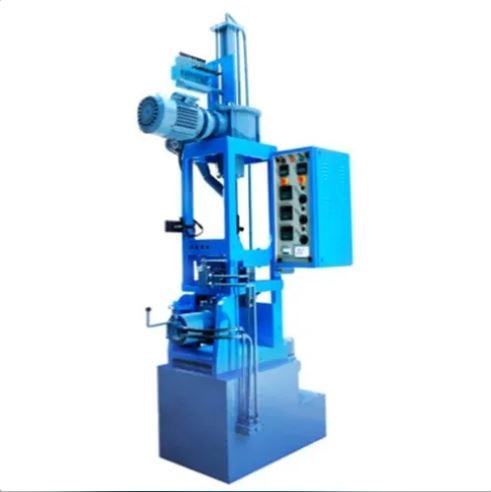 | Injection Moulding Machine VRT Gum Boot Deluxe Vertical Injection Moulding Machine ₹600000 Clamping Force 500 Ton Material Metal Max. Plasticizing Capacity 125 Kgs/hr Screw Diameter 70 mm Number Of Screws Rotations 240 r.p.m Maximum Shot... View product → |
Frequently asked questions
How should you schedule VRT 600 maintenance by shift, week and year?
Use the OEM manual and track machine hours, material, mould configuration and shift length. Perform operator checks each shift, planned inspections each week, and an annual service review; shorten the schedule for PVC, abrasive compounds, high dust, long shifts or frequent mould changes.
How do you clean the VRT 600 after PVC, EVA or other plastics processing?
Follow the material supplier’s purge procedure, isolate power before cleaning external areas, and remove residue from the nozzle, barrel surroundings, hopper, mould area and platens with tools approved for the machine. Do not scrape sealing surfaces or use solvents that attack cables, hoses or guards.
Which hydraulic, electrical and temperature checks reveal an approaching fault?
Look for oil leaks, foaming, unusual pump noise, unstable movement, loose terminals, damaged cables, heater faults, sensor alarms and temperature readings that drift from the established process record. Stop and investigate repeated alarms instead of simply resetting them.
How do you inspect the screw, clamp, platen and mould before restarting?
Check the screw and nozzle for residue or damage, confirm clamp movement is unobstructed, inspect platen faces and tie-bar areas, and verify mould alignment, cooling connections, guards and fasteners. Remove tools and cleaning materials before running a low-risk test cycle.
When should a Delhi factory call for VRT machine servicing?
Call for servicing when leaks persist, pressure or temperature fluctuates, the clamp moves unevenly, alarms return, electrical components overheat, mould alignment changes, or product defects continue after process settings are verified. Stop the machine for any guard, emergency-stop or hydraulic safety fault.
Keywords