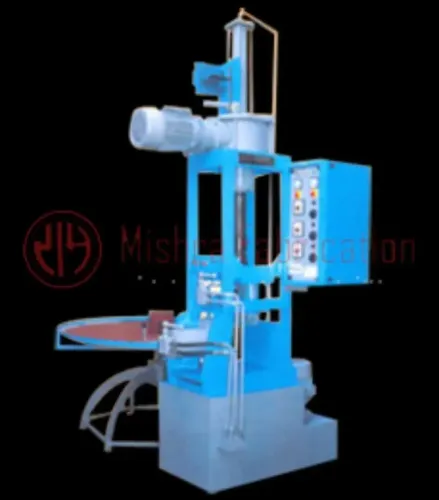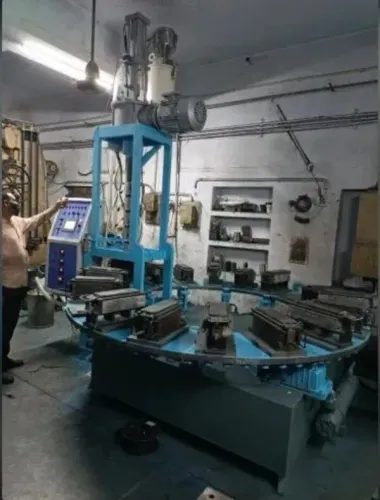
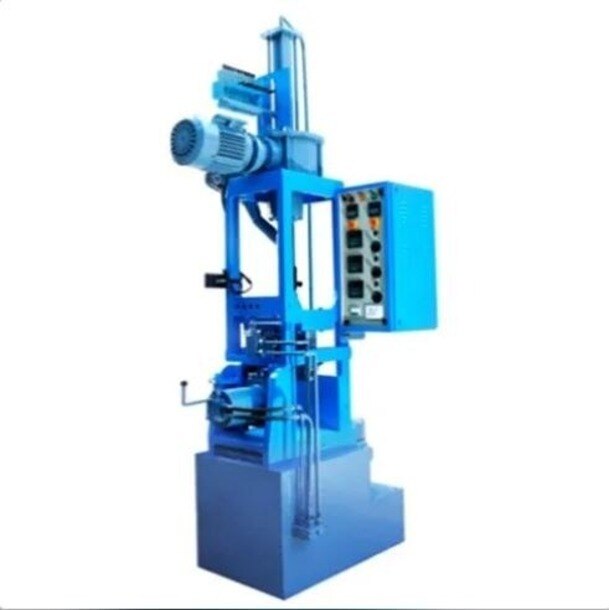
Choosing a VRT 600 requires more than matching a part’s weight to a model number. You need to verify the machine’s actual clamp rating, usable shot size, mould fit, material capability, production rate and insert-handling advantages against the work your factory expects to run.
Key takeaways
- Confirm clamp force and mould dimensions from the actual part and tool.
- Match shot size and injection unit to resin, insert geometry and cycle time.
- Compare finished output, floor space and changeover effort with other layouts.
- Approve the machine only after a documented application trial and acceptance checklist.
Start with the component and the moulding job, not the model name
Grommets, bushings, clips, seals, sensor surrounds, terminals, cable-related parts, brackets and overmoulded handles are practical targets when operators must place fabric, wires, terminals, metal inserts or preformed seals into the mould. A vertical injection machine for auto parts gives clear access from above, making insert placement and overmoulding easier than on many horizontal layouts.
| Buyer profile | VRT 600 fit | Main limitation |
|---|---|---|
| Small-to-medium runs of insert-moulded parts | Strong fit for manual loading, dedicated nests or a shuttle table | Manual loading can set the cycle time |
| Nylon, PP, ABS, PVC, TPE, PBT or filled compounds | Fit depends on drying, temperature control, screw wear and mould design | Confirm resin compatibility rather than choosing by part name |
| High-cavitation commodity parts | Usually weak fit | Horizontal robot take-out and short cycles may deliver more output |
| Large projected-area components | Fit only after clamp-force and mould-fit checks | Part weight alone does not prove suitability |
VRT 600 machine buyers must assess the complete cell, not the frame: operator clearance, guarding around the vertical platen, insert racks, conveyors, drying equipment and mould-change space all consume floor area.
A compact injection machine for manufacturers becomes impractical if its open-door safety envelope blocks aisles or leaves no room for a rotary table, shuttle or robot. Verify interlocked access, emergency stops, two-hand or equivalent controls, mould-area protection, platen non-return and hydraulic-pressure dissipation before approval.
Prove clamp force, shot size and mould fit before approving the machine
Establish suitability from three facts: verified clamp rating, calculated clamp demand and a mould-fit inspection. A VRT 600 for plastic component production in Delhi is not approved from the model name alone.
1. Confirm what “600” means. Check the nameplate, hydraulic specification and test certificate to establish whether it denotes 600 tonnes-force, 600 kN or an internal code. These ratings are not equivalent: 600 tonnes-force is about 5,884 kN, while 600 kN is about 61 tonnes-force.
2. Calculate clamp demand from the total projected area of every cavity and runner multiplied by required cavity pressure, using consistent units, then add an engineering margin. Part weight cannot replace this calculation; too little clamp force causes flash, mould opening and tie-bar damage.
3. Size the usable shot, not the advertised maximum. Add part weight, runner weight and cold slug, then retain a controllable cushion and keep the process away from the end of the metering stroke. Compare shot data on one basis: cubic centimetres, polystyrene grams and actual-resin grams are different measurements.
4. Check the complete mould envelope before approval. Record platen size, tie-bar spacing or column-free access, minimum and maximum mould height, daylight, ejector stroke, mould weight, and shuttle or rotary-table dimensions. Confirm ejector and insert-loading clearance; a mould can fit the platen yet strike a tie bar or lack operating space.
VRT 600 machine buyers should require a trial with the actual mould, resin and inserts before ordering.
Match the injection unit, resin and factory utilities to the process
Clamp tonnage does not prove that the injection unit can fill your component. For a vertical injection machine for auto parts, verify screw diameter, usable metering stroke, shot volume, injection pressure, injection rate, plasticising rate, screw L/D ratio and recovery time with the actual resin.
A short stroke, slow recovery or insufficient flow rate creates short shots even when the mould closes securely.
| Resin | Process checks | Wear, nozzle and mould checks |
|---|---|---|
| Nylon | Dry thoroughly; control melt temperature and moisture | Specify screw and check-ring metallurgy; vent the mould |
| Polypropylene | Control melt temperature and cooling | General-purpose screw; balanced gates and adequate vents |
| ABS | Dry if specified by the grade; limit residence time | Check-ring sealing and cosmetic venting |
| PVC | Tight temperature control; minimise residence time | Dedicated corrosion-resistant screw, barrel and nozzle |
| TPE | Dry grade as required; prevent overheating | Shutoff nozzle and flexible-part ejection |
| PBT | Dry aggressively; control residence time | Wear-resistant parts for reinforced grades; venting |
| PPS | Dry and control high melt temperature | Hardened metallurgy, suitable nozzle and robust gates |
| Glass-filled compounds | State glass percentage and grade | Require abrasion-resistant screw, barrel and check ring |
For glass-filled nylon, do not accept a standard general-purpose screw without written confirmation. A plastic component machine in New Delhi must also match the factory utilities:
- Voltage, phase, frequency and peak current
- Hydraulic or servo power and oil-cooling capacity
- Mould-temperature-controller load
- Compressed-air demand
- Chiller flow and water temperature
An undersized panel or cooling loop can destroy process repeatability. The quotation must state these figures and the resin-specific recovery time.
Calculate finished output and compare the VRT 600 with other machine layouts
A 600 kg/hr plasticising figure is not finished-parts output. Calculate usable capacity as: parts/hour = cavities × (3,600 ÷ cycle seconds) × uptime × (1 − scrap rate).
Check material demand separately: shot mass per cycle equals parts and runners plus the cold slug; multiply it by cycles per hour and compare the result with the usable shot and recovery capability.
A 16-cavity mould running a 20-second cycle at 85% uptime and 3% scrap yields about 2,380 good parts per hour. If an operator needs 12 seconds to place inserts, the loading task—not injection speed—sets the cycle, so trial the complete cell before approving the VRT 600.
Compare the complete footprint, including operator clearance, guarding, insert racks, mould-change space, conveyors and drying equipment.
| Option | Best fit | Warning sign |
|---|---|---|
| VRT 600 | Insert moulding, overmoulding and small-to-medium runs | Manual loading consumes the cycle |
| Compact injection machine for manufacturers | Lower shot demand and fewer cavities | Too little clamp area or shot capacity |
| Horizontal machine | High-volume parts with automatic take-out | Poor access for hand-loaded inserts |
| Rotary table or shuttle | Multiple insert stations and parallel loading | Added table, guarding and floor space |
| VRT 1000 | Larger projected area, shot size or throughput | Unnecessary cost for smaller moulds |
VRT 600 machine buyers should compare projected area, mould height, daylight, ejector stroke and table dimensions, not the model name alone. Mishra Fabrication, a Delhi-based manufacturer, can quote the machine with utilities, layout and application assumptions stated explicitly.
Related product
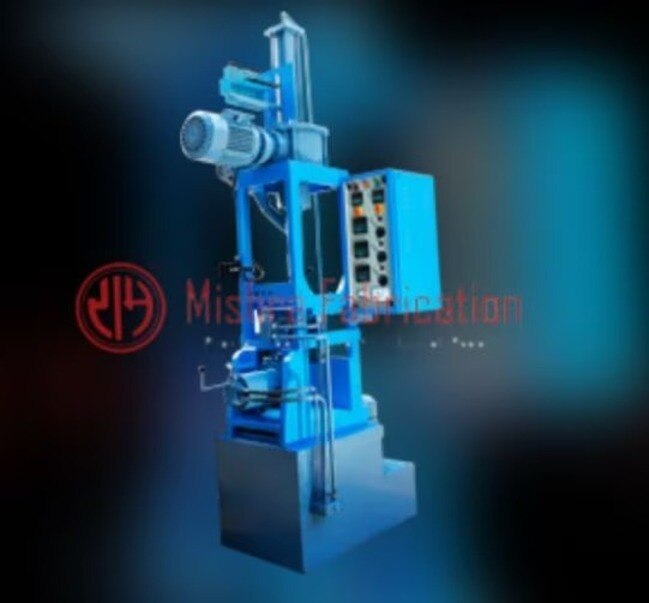
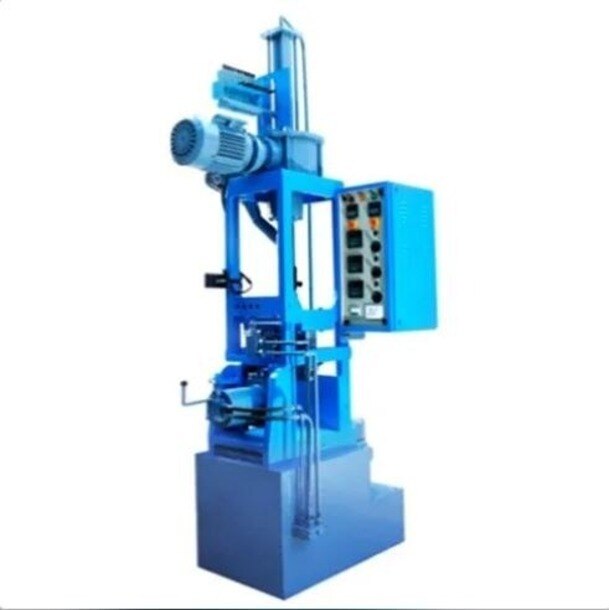
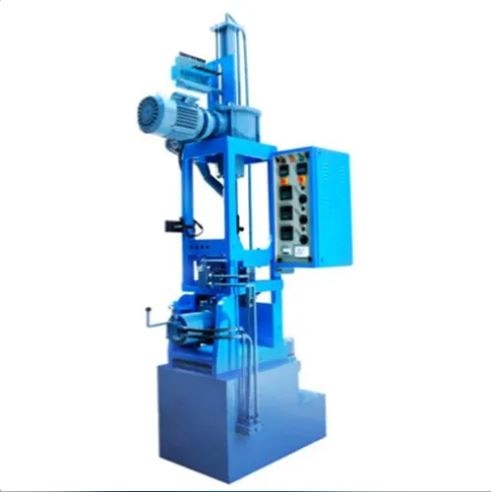 | Injection Moulding Machine VRT 600 Vertical Injection Moulding Machine ₹450000 Clamping Force 500 Ton Material Metal Max. Plasticizing Capacity 60 Kgs/hr Screw Diameter 55 mm Brand RAM Power Source Electric Maximum Shot Capacity... View product → |
Use an application trial and a traceable acceptance checklist to make the final choice
Do not place an order until the machine proves your actual moulding job, not merely an empty-machine specification. Run the VRT 600 for plastic component production in Delhi with the production mould, resin, inserts and intended operators.
- Record shot weight, part dimensions, flash, insert retention, cycle time and recovery time across a sustained run.
- Test mould protection with an obstruction or approved force-check method, then document the machine response.
- Interrupt power or the cycle and verify safe restart performance, including repeatable first-off parts.
- Keep the results, process settings, sample parts and measured defects with the quotation.
For comparable offers, require each quotation to state the injection-pressure basis, injection rate, shot units, material assumptions, mould-height and platen limits, and cooling requirements. Ask for screw diameter, usable metering stroke, plasticising rate, screw L/D ratio and material-specific recovery time; clamp force alone cannot prove suitability for a vertical injection machine for auto parts.
For automotive or traceable parts, verify recipe locking, user permissions, alarm history, cycle and shot counters, process-value recording and data export. The exported record must include injection pressure, speed, screw position, transfer position, holding pressure and time, barrel temperatures and cycle time.
Finish with a machine safety inspection: guarded vertical platens, interlocked doors, emergency stops, two-hand or equivalent controls, mould-area protection, non-return after interruption and hydraulic-pressure dissipation. Reject a trial that passes visually but cannot produce this evidence.
Frequently asked questions
Which plastic components suit the VRT 600?
Grommets, bushings, clips, seals, sensor surrounds, terminals, brackets and overmoulded handles suit the machine when their mould, insert and material requirements fit its specifications.
How do you verify that the VRT 600 has enough clamp force?
Calculate projected moulded area, include the material’s cavity pressure requirement and compare the result with the machine’s rated clamp force. Check mould height, daylight, tie-bar clearance and platen dimensions as well.
What must you match between the injection unit and the plastic resin?
Match the shot size, screw diameter, injection pressure, temperature control and plasticising capacity to the resin, part weight, runner volume and required cycle.
How should you compare the VRT 600 with other machine layouts?
Compare finished parts per hour, cavity count, operator access, insert-loading time, floor space, changeover time, automation options and utility consumption rather than comparing machine names alone.
What should an application trial prove before purchase?
The trial should produce acceptable parts at the target cycle while recording fill quality, flash, weld lines, insert position, temperatures, pressure, ejection and repeatability against a signed acceptance checklist.
Keywords