

Expanding a footwear production unit often requires more than purchasing additional equipment. Factory owners must determine whether the new machine will fit the existing process, workforce, electrical infrastructure and production targets.
A suitable Footwear Making Machine Supplier in Delhi NCR should help the buyer examine these connected requirements before recommending equipment. This is particularly important for MSMEs that must achieve higher output without creating excessive operating overhead.
Identify the Current Production Constraint
A new machine will deliver value only if it addresses the actual bottleneck. Low production can result from slow moulding, inadequate cooling, frequent changeovers, manual material handling or inconsistent pressing.
Production managers should record:
- Output achieved per shift
- Average cycle time
- Rejection percentage
- Changeover duration
- Operator idle time
- Recurring machine stoppages
- Capacity of upstream and downstream processes
This information reveals whether the factory needs another machine, a faster machine or improvements elsewhere in the line.
Match Capacity Across the Production Line
Installing a high-output moulding machine does not automatically increase finished footwear production. Trimming, finishing, packing and material preparation must be capable of handling the additional volume.
For example, if moulded soles accumulate because finishing capacity is limited, increasing moulding output may simply increase work-in-progress inventory. A responsible supplier should consider the broader workflow rather than discussing only the rated capacity of one machine.
Examine Material and Product Compatibility
Footwear machinery may be designed for particular materials, product sizes and mould configurations. Share current samples and planned product categories with the supplier.
Clarify whether the machine supports:
- Existing raw materials
- Planned material grades
- Current mould sizes
- Single-colour or multicolour production
- Different footwear size ranges
- Inserts or embedded components
- Rapid mould changes
- Seasonal product variations
If tooling modifications are necessary, they should be identified before the purchase is finalised.
Evaluate Space and Utility Requirements
Factories in Delhi NCR frequently operate from industrial units where floor area and electrical capacity are limited. Machine dimensions alone do not represent the total space required.
Allow room for operator movement, mould handling, raw material storage, maintenance access and safe clearance. Check the connected load, voltage requirements, compressed air demand and cooling arrangement.
An equipment layout prepared before installation can prevent expensive repositioning later.
Compare Manual, Semi-Automatic and Automatic Options
The appropriate automation level depends on order volume, product variety and workforce availability.
Manual or semi-automatic equipment may suit short production runs and frequent product changes. Automated machinery can improve repeatability and reduce handling, but it usually requires stronger maintenance discipline and a higher initial investment.
Compare options using output per operator rather than machine speed alone. This shows whether automation will create a measurable labour and productivity advantage.
Review the Supplier’s Technical Support
A supplier’s role should continue through delivery, installation and stabilisation. Ask whether support includes:
- Site-readiness guidance
- Machine unloading instructions
- Installation supervision
- Trial production
- Operator training
- Maintenance schedules
- Spare-parts recommendations
- Remote troubleshooting
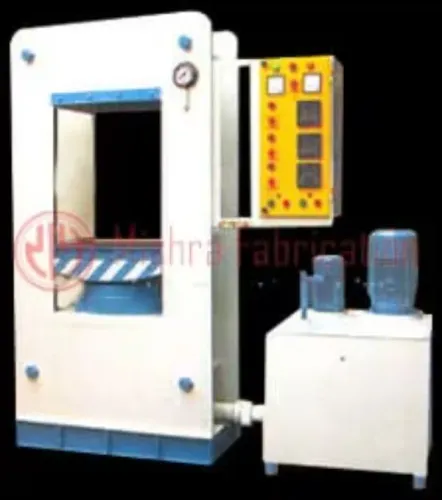
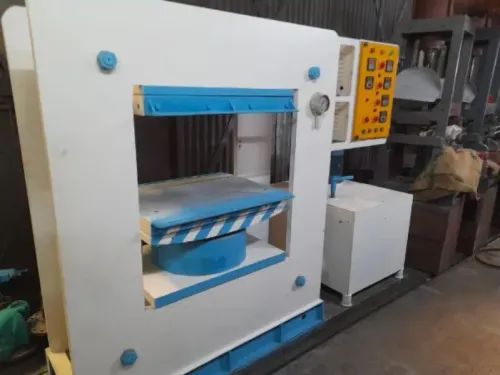
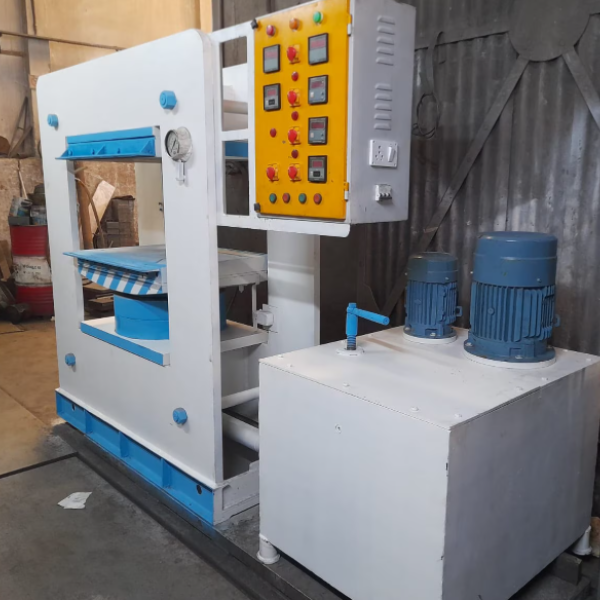
Mishra Fabrication supplies machinery for footwear production requirements and can be assessed using production data, material details and factory constraints. A detailed technical discussion is more useful than selecting equipment from general specifications alone.
Compare Commercial Offers Correctly
Two quotations may appear similar while including different accessories, components and service terms. Create a common comparison sheet covering machine capacity, controls, tooling, installation, taxes, transport, warranty and expected delivery.
Also clarify what is excluded. Foundation work, electrical cabling, oil, cooling equipment, moulds or trial material may be the buyer’s responsibility.
Plan for Future Growth
The machine should meet present requirements without becoming unsuitable as the business grows. Consider expected product additions, mould sizes and order volumes over the next three to five years.
However, purchasing excessive unused capacity can raise power consumption and capital cost. The best choice provides reasonable flexibility while remaining efficient at the factory’s normal production level.
A well-selected footwear machine should remove a verified production constraint and integrate smoothly with the complete line. Careful supplier evaluation helps growing units across Delhi NCR expand capacity with greater control over quality, cost and operational risk.